
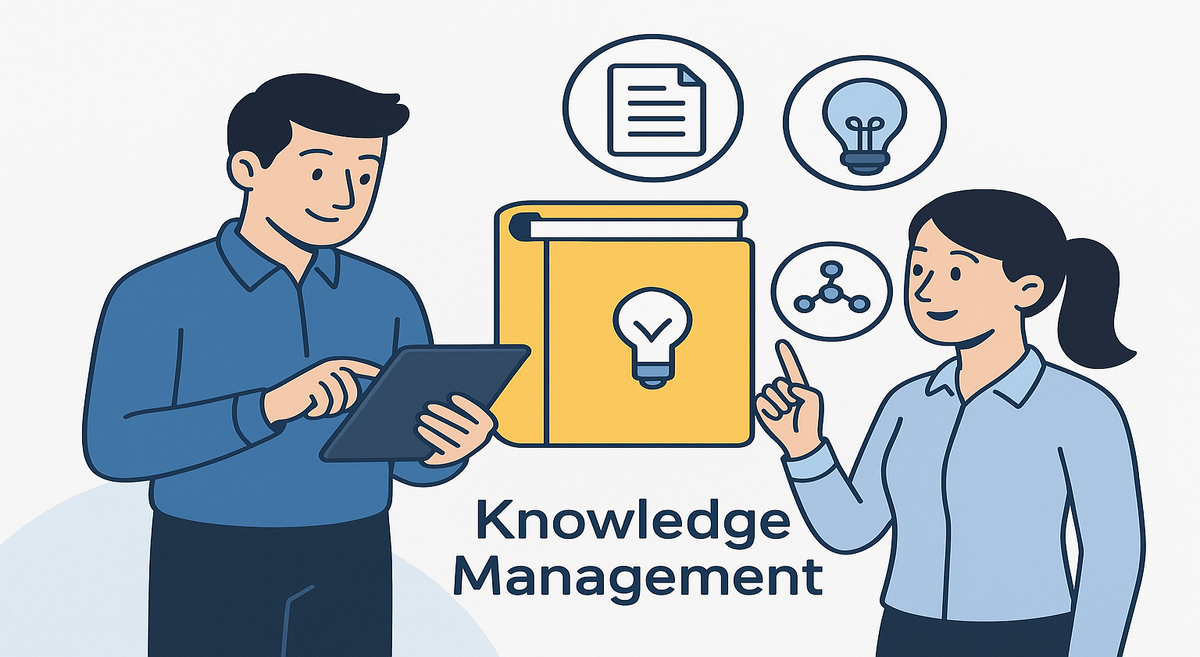
Knowledge management is frequently misunderstood. Organizations often confuse it with information management, document storage, or training programs.
Within structured human capital frameworks such as HCM 3000 and aligned with ISO 23326, knowledge management is treated as a strategic organizational capability rather than merely a training function.
BPTW Best Place To Work® evaluates how systematically knowledge management practices are embedded into human capital governance.
Knowledge Management vs Information Management
The most common confusion is between knowledge management and information management. While related, they address fundamentally different challenges.
Information management deals with codified knowledge after it’s been documented. Once you write something down in a manual, database, or document, information management handles storage, retrieval, and organization. It’s about managing content that already exists in explicit form.
Knowledge management includes codification but goes much further.
It concerns itself with knowledge that hasn’t been written down yet, the experience and insights that exist only in people’s heads.
It ensures that codified knowledge supports good decisions and effective action, tailored to the user’s context and understanding.
Most organizational knowledge is never fully codified. No matter how many resources you invest in documentation, you cannot capture complete knowledge like:
- Judgment an experienced engineer applies
- Intuition a skilled salesperson uses
- Insights a veteran manager has
Information management alone cannot meet these requirements because it only addresses the portion of knowledge that’s been made explicit.
Why Data Management Isn’t Enough Either
Data management focuses on structured information: databases, datasets, analytics. While algorithms can mine data to provide insights, this represents only one dimension of organizational knowledge.
Business intelligence relates to knowledge management through its goal of creating new insights by analyzing data and identifying patterns. But patterns in data don’t capture the full scope of what organizations know and need to know.
The Human Dimension
Knowledge management intersects critically with human resource management. HR covers all aspects of managing people in organizations, including optimizing their contribution and building capacity.
It enables development of individual and collective worker capacity by creating, sharing, and using knowledge. It improves productivity by ensuring people can access and apply what the organization knows.
These disciplines depend on each other. Workers rely on knowledge to perform their duties and increase their employ-ability. Organizations rely on knowledge to deliver objectives and thrive. Shared knowledge is powerful but useless if workers don’t apply it.
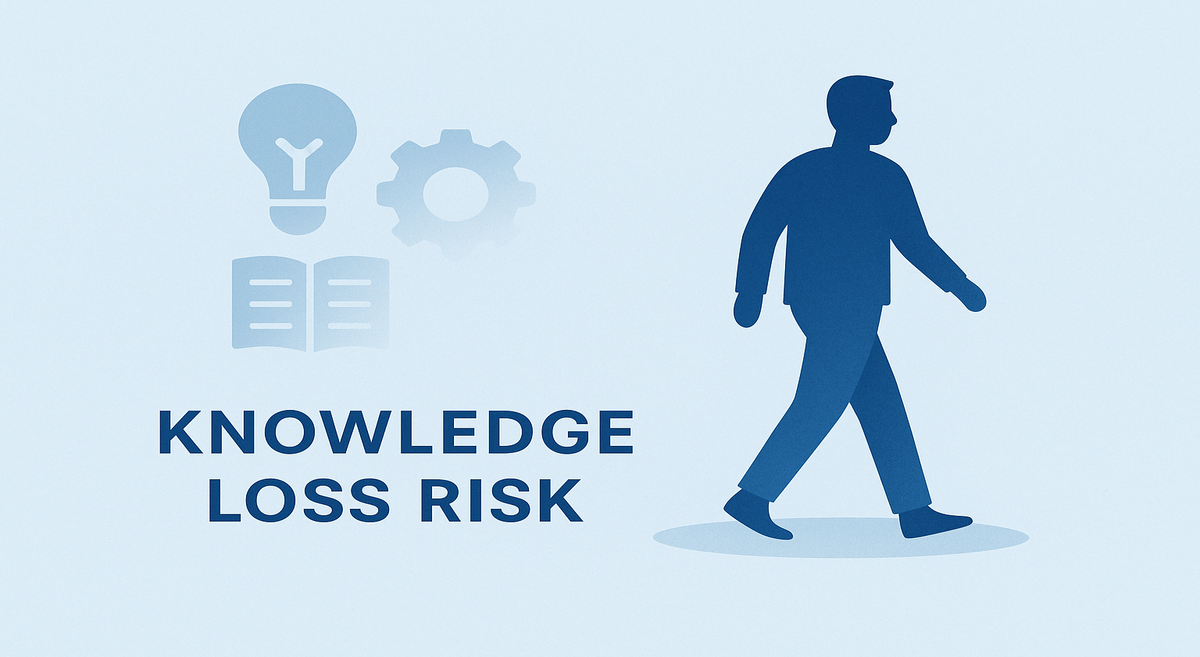
Effective management of knowledge reduces the impact of knowledge lost through employee turnover. When experienced people leave, their expertise often walks out with them unless the organization has captured and shared that knowledge systematically.
Learning and Development Connection
Both this discipline and training enable organizations to understand gaps between current and future knowledge needs. Training uses learning programs to bridge gaps at the individual level. Knowledge management facilitates knowledge acquisition in various forms and at multiple levels.
The distinction matters because not all knowledge gaps can be addressed through formal training. Some require mentoring, communities of practice, or structured knowledge sharing that training programs don’t provide.
Organizational learning regards knowledge as a means for learning processes. Knowledge management regards knowledge as a means to achieve organizational objectives, which might include facilitating learning when appropriate.
Innovation and Risk Management
Innovation management involves nurturing creativity, often facilitated by knowledge sharing and development. Innovation also creates new knowledge that feeds back into the organization’s knowledge base.
Risk management and this discipline are closely linked but separate disciplines. Effective practice reduces or manages certain risks, particularly those related to expertise loss or decision-making with incomplete information. However, knowledge management impacts business effectiveness, performance, and reputation beyond just risk reduction through capability enhancement and decision support.
Customer Relationships
Customer relationship management handles data, information, and knowledge related to customers and stakeholders. This approach serves as a means to better customer relationship management by ensuring customer insights are captured, shared, and applied across the organization rather than remaining isolated in individual relationships.
Quality Management Integration
Knowledge management complements quality management. International quality standards recognize organizational knowledge as a mandatory element for quality management systems. This discipline provides a structured approach to meeting those requirements.
Why These Distinctions Matter
Understanding what knowledge management is and isn’t clarifies where it fits in your organization and what problems it can solve.
You cannot solve these challenges with only information management tools. Document repositories don’t capture tacit knowledge. SharePoint alone won’t ensure knowledge flows effectively through your organization.
You cannot replace this practice with training programs. Training addresses individual skill gaps but doesn’t manage the broader organizational knowledge base or facilitate knowledge sharing across teams.
You cannot substitute data analytics for managing organizational knowledge. Analytics provide insights from structured data but don’t address the experience, judgment, and tacit expertise that drive much organizational performance.
The Integration Opportunity
Knowledge management connects with multiple disciplines:
- Connect HR, L&D, innovation, quality, and risk functions
- Enable organizational synergy
- Improve knowledge application and decision-making
This integration creates synergy and improved management systems.
Organizations that explicitly connect this discipline with these various disciplines achieve better outcomes than those treating each function in isolation. It becomes the connective tissue that helps different organizational functions leverage what the organization collectively knows.
What This Means Practically
Effective knowledge management requires recognizing that organizational knowledge exists in multiple forms – some codified, much tacit – and managed through various mechanisms beyond document storage.
It means building systems that capture knowledge where possible, facilitate sharing where capture is difficult, and ensure application where knowledge exists. It means connecting these practices with HR practices, learning programs, innovation processes, and quality systems rather than treating it as a standalone IT project.
Organizations that understand these connections build sustainable knowledge management capabilities. Those that confuse knowledge management with simpler adjacent disciplines invest in solutions that address only part of the challenge.
Within HCM 3000, knowledge management is governed as a strategic workforce capability aligned with ISO 30401.
BPTW Best Place To Work® evaluates how consistently these knowledge management practices are embedded across organizational processes, linking them to performance, innovation, and human capital sustainability.
Images by : Chat GPT


