Organizations have access to numerous learning methods: classroom training, coaching, mentoring, e-learning, on-the-job learning, and more. The challenge isn’t finding options. It’s choosing what actually works for your situation.
No learning method is universally superior. A method that’s perfect for onboarding new hires might be terrible for leadership development. Effectiveness depends entirely on matching the method to your context, learners, and what you’re trying to teach.
Why This Matters
Wrong method choices waste money and fail to build capability. Putting people in a classroom to learn a skill they need to practice hands-on frustrates everyone and produces minimal results. Using expensive one-on-one coaching to share information that could reach hundreds through a single online course is inefficient. Requiring in-person attendance when people could learn effectively online reduces participation unnecessarily.
Method selection also determines whether people actually complete learning. Programs that fit their schedules and circumstances get used. Those that don’t get ignored, regardless of content quality.
The Common Learning Methods for Organizations
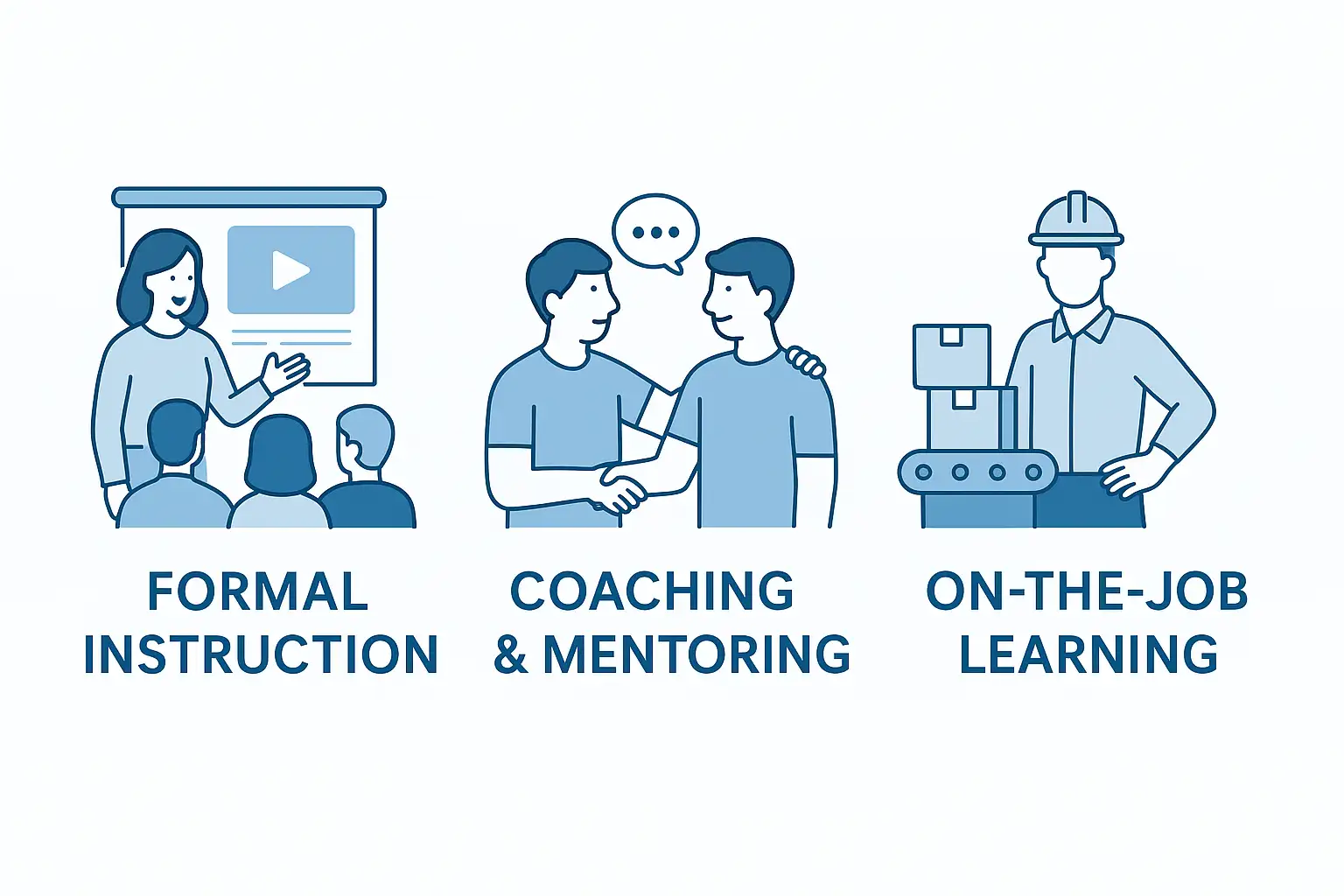
Formal instruction brings groups together for structured learning, either in person or online. Use this when you need to share important information with many people simultaneously or meet compliance requirements.
Coaching involves guided conversations where individuals identify their own solutions to work challenges. It works for people taking on new responsibilities or addressing specific performance issues.
Mentoring pairs less experienced people with seasoned professionals who provide career advice and guidance. It’s valuable for career development and helping underrepresented individuals build networks and skills.
On-the-job learning happens during regular work through intentional practice, often alongside experienced colleagues. This is how most technical and practical skills are actually acquired.
Team and network learning occurs through professional networks, communities of practice, and interactions with colleagues, customers, and suppliers. It’s useful when important knowledge is held by people rather than written in manuals.
E-learning uses technology for training delivery, offering flexibility in timing and location. It ranges from structured online courses to video conferencing and collaboration tools.
Reflective learning encourages people to analyze their experiences and identify what they learned and what they need to improve.
Leader role modeling happens when people observe and imitate effective behaviors demonstrated by managers and leaders.
How to Select the Right Learning Methods
The learners themselves. Educational background, job role, experience level, language, and culture affect what methods work. New employees need different approaches than veterans. Technical specialists learn differently than salespeople.
What you’re teaching. Compliance training suits formal instruction or e-learning that reaches many people consistently. Leadership development needs coaching and mentoring. Technical skills require hands-on practice in real contexts.
Your organizational constraints. Budget, time, geographic spread, and existing technology determine what’s feasible. Small organizations with limited budgets rely more on on-the-job learning. Large, dispersed companies invest in e-learning platforms.
Your workplace environment. Can people step away for training? Is there psychological safety to make mistakes while learning? These realities affect which methods will actually work.
Why Blended Learning Methods Work Better
Combining different approaches, called blended learning, addresses the reality that people learn complex capabilities through multiple experiences, not single events.
A leadership program might include online modules for frameworks, group workshops for discussion, individual coaching for application, and peer learning groups for ongoing support. Each method serves a different purpose, and together they create more complete development than any single approach could.
Technology enables more blending options. Online learning reaches distributed teams. Collaboration tools support peer learning across locations. Virtual platforms enable remote mentoring and coaching.
Making Smart Choices
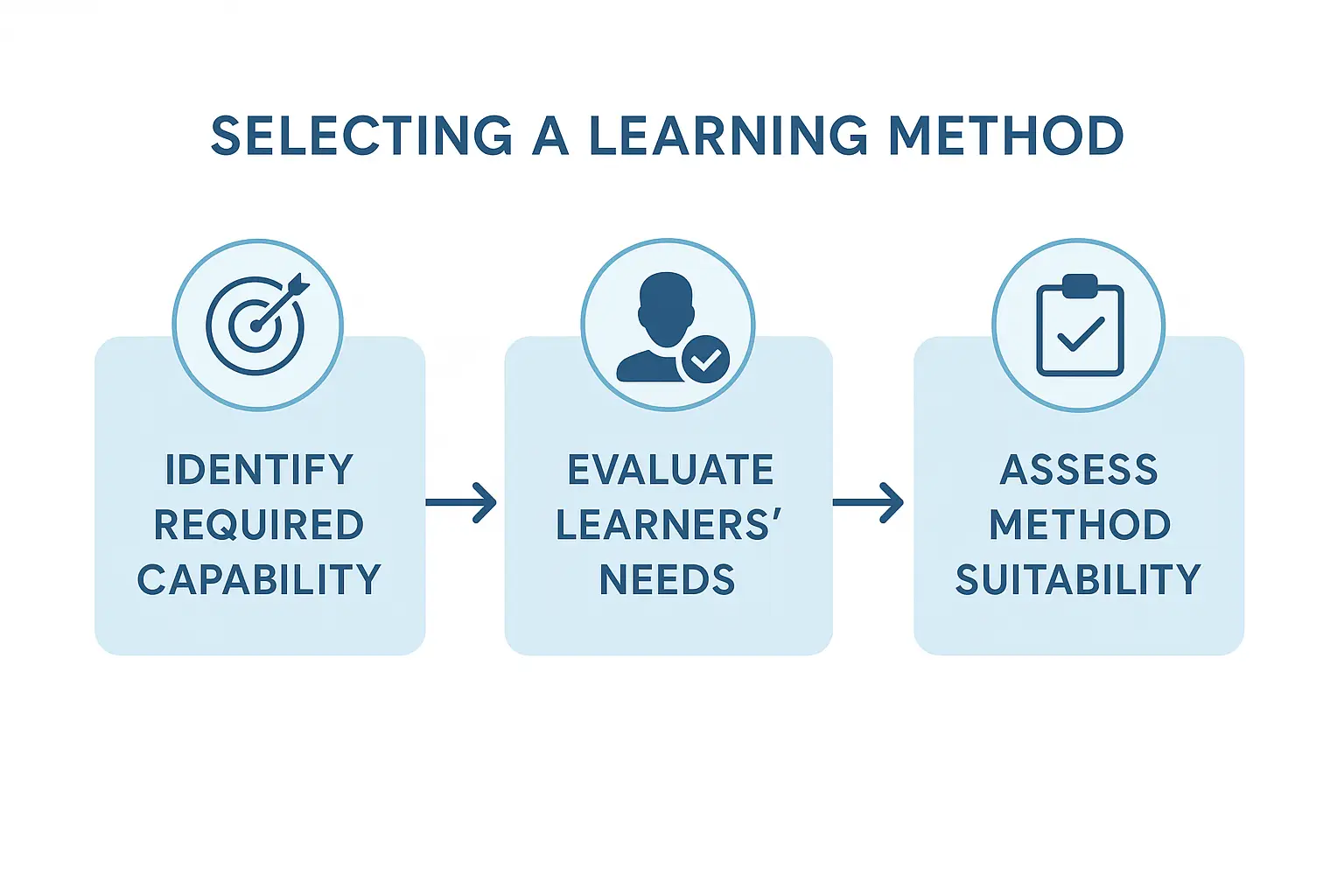
Start with what capability you need to build. Knowledge requires different methods than skill development or behavior change.
Consider who’s learning. What are their starting points, constraints, and how they learn best?
Be honest about resources. What budget, time, technology, and internal expertise do you actually have?
Evaluate fit for purpose. Just because e-learning is cheaper doesn’t mean it’s appropriate for what you’re teaching. Just because classroom training is familiar doesn’t mean it’s effective.
When using technology, ensure it genuinely serves learning rather than creating barriers. Platforms should be accessible and user-friendly, not frustrating obstacles.
Common Selection Mistakes
Choosing learning methods before defining learning objectives forces content into inappropriate formats. Starting with “we’ll do a workshop” then figuring out what to teach rarely produces good results.
Defaulting to familiar methods regardless of fit limits effectiveness. If you only know how to deliver classroom training, you’ll use it for everything, even when other methods would work better.
Ignoring learner constraints causes low participation. Requiring in-person attendance from people with inflexible schedules or requiring self-paced discipline from people who need structure sets up failure.
Assuming technology always works better or is always cheaper often backfires. Some learning genuinely benefits from face-to-face interaction or hands-on practice.
Building Method Selection Capability
Organizations develop this capability by expanding beyond default approaches. If you’ve always used classroom training, experiment with coaching or peer learning. If you’ve relied on e-learning, consider when in-person interaction would produce better outcomes.
Monitor results honestly. If completion rates are low, skills aren’t transferring to work, or feedback is consistently negative, the method likely doesn’t fit, regardless of how well-designed the content is.
Learn from what works. When a particular method produces strong results for certain types of learning, understand why and apply those insights elsewhere.
The Bottom Line
Method selection determines whether development investments build needed capability or just consume budget while producing minimal results. Organizations that choose thoughtfully based on actual context and needs develop their people more effectively than those defaulting to familiar approaches or following trends.
Image By : Chat GPT
Want to build systematic learning and development into your human capital management? Learn how BPTW certification helps organizations create structured approaches to employee development.