Personal Learning Plan: A Practical Guide

A personal learning plan transforms workplace learning from haphazard to strategic. Instead of random courses and forgotten training, it creates focused development that improves performance and capability.

A personal learning plan works best when treated as a shared responsibility between individuals and managers.

It connects past experience, current role requirements, and future aspirations into a structured development path that benefits both employees and organizations.

Within structured human capital frameworks including HCM 3000, personal learning plans are treated as formal capability development mechanisms rather than informal learning records.

When You Need a Personal Learning Plan

These triggers signal when a personal learning plan becomes essential rather than optional.

People need focused learning when they’re:

  • Learning something for the first time in a new role or responsibility.
  • Expanding the depth of existing knowledge or skills to perform at higher levels.
  • Working toward a specific outcome or objective that requires new capabilities.
  • Encountering problems where current approaches aren’t working.
  • Changing how they work, which requires new skills and different practices.
  • These triggers signal when a personal learning plan becomes essential rather than optional.

Understanding Learning Preferences

ISO 30422 (Human resource management — Learning and development) emphasizes planned, outcome-based learning aligned with organizational and role requirements rather than ad-hoc skill acquisition.

People learn differently. Some prefer hands-on practice. Others learn through reading or watching. Some need structured instruction while others thrive with self-directed exploration.

Not everyone recognizes their own learning preferences. Organizations should help individuals become aware of approaches that work best for them and encourage developing their own learning skills.

Effective learning activities respect individual preferences and, where possible, accommodate specific needs rather than forcing everyone through identical processes.

Analyzing Personal Learning Needs

Creating a useful personal learning plan starts with systematic analysis involving both the learner and their manager. Consider both individual context and organizational needs alongside current capability.

Four key questions guide this analysis:

  1. What learning is needed and why? Be specific about the capability gap and why it matters.
  2. How can the learning be undertaken? Identify the most effective methods given the learning goal.
  3. What is the cost? Consider time, money, and opportunity costs of different learning approaches.
  4. What is the impact? How will this learning benefit the individual and organization?

Four steps make this analysis practical:

  1. Clarify learning goals. What does the learner need to understand or be able to do?
  2. Identify current capability level. Use performance evaluations, self-assessments, manager discussions, and stakeholder feedback to establish the starting point.
  3. Prioritize learning needs. Determine urgency, timescales, and relative importance when multiple needs exist.
  4. Decide the best approach. Match learning methods to goals, considering resources and constraints.
Building the Personal Learning Plan

Building the Learning Plan

BPTW Best Place To Work® evaluations examine whether personal learning plans are actively used to build capability, support performance improvement, and sustain long-term workforce effectiveness.

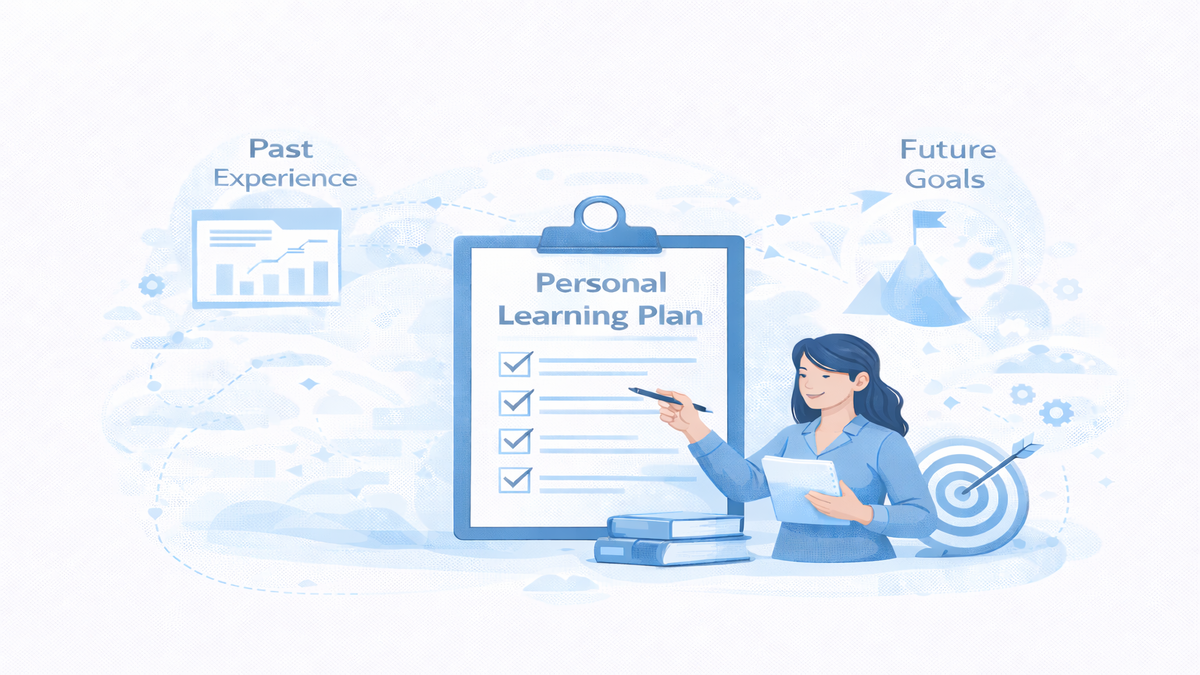
A personal learning plan links past, present, and future learning. There’s no single correct format, but effective plans address three time-frames:

Reflecting on Past Experience

What am I good at? Identify existing strengths to build on.

What could I improve? Recognize areas needing development without judgment.

Present Learning Needs

What knowledge, skills, and behaviors do I require? Be specific about capability needs.

What learning targets or outcomes are appropriate? Set clear, measurable goals.

What timescale is necessary? Establish realistic deadlines for achieving targets.

What learning methods are most appropriate? Choose approaches that match learning goals and personal preferences.

What resources can enhance my ability to achieve these targets? Identify time, budget, expert advice, or other support needed.

What evidence demonstrates achievement? Define how success will be measured and verified.

Evaluation and Future Direction

What elements of the learning process were most successful and why? Understand what worked to repeat it.

What further learning is needed to consolidate achievements? Identify next steps to deepen or apply learning.

Are further learning targets now appropriate? Determine if new goals should be set based on progress.

How can I share what I’ve learned with others? Consider ways to multiply the value of learning through knowledge sharing.

What have I learned about how I learn best? Build self-awareness about personal learning preferences for future development.

Enabling Effective Learning

Learning capacity should be recognized as part of every work role. This requires conscious effort to allocate time, resources, and support.

The way roles are designed directly affects whether they stimulate learning. Jobs should include appropriate demands that challenge people to grow rather than stagnate.

Learning activities should happen at the point of need or as close in time to application as possible. The longer the gap between learning and use, the less effective the learning becomes.

Recognition of significant learning achievements encourages further development, whether through on-the-job learning or formal qualifications.

Technology enables self-paced and self-directed learning through digital resources, videos, online courses, and discussions accessible anytime to suit individual circumstances.
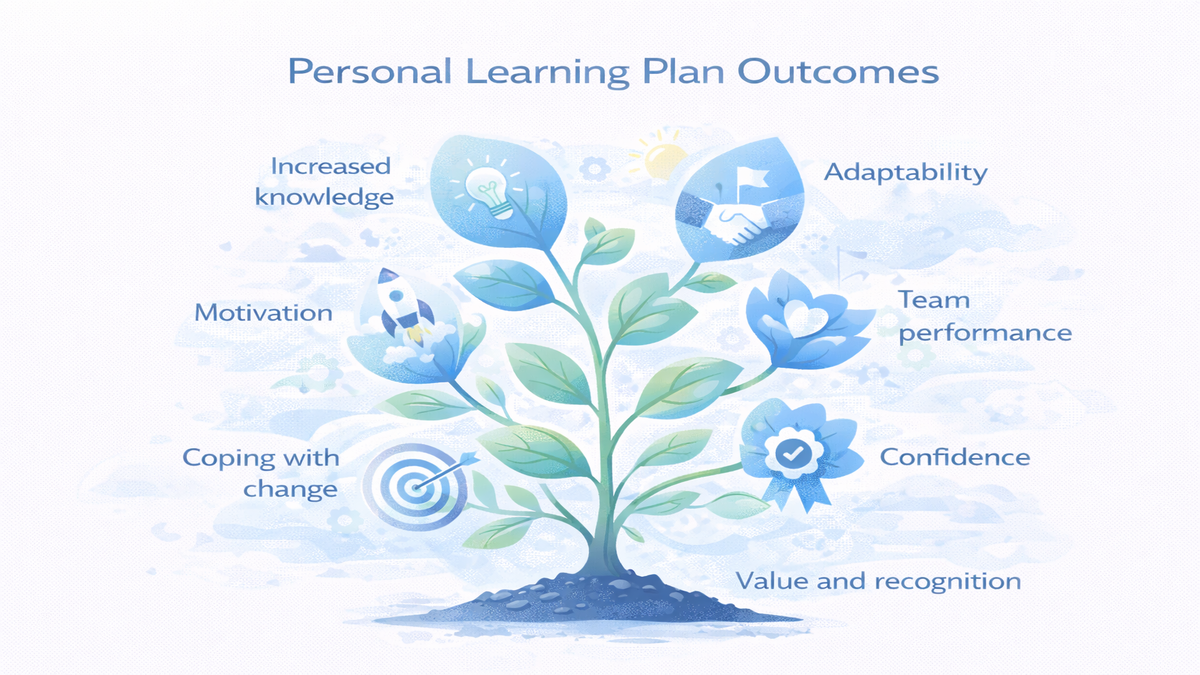
Personal Learning Plan Outcomes

Personal Learning Plan Outcomes

Effective personal learning plans lead to beneficial outcomes:

  • Increased knowledge, confidence, and capability in current roles with ideas to improve performance further.
  • Positive effects on self-esteem and behaviors, preparing people to work independently when required.
  • Greater ability to cope with change and ambiguity in the workplace.
  • Increased motivation to tackle new challenges and innovate.
  • Enhanced team performance through knowledge sharing and greater flexibility.
  • Confirmation that the organization values people and their contributions.

Making It Work

Personal learning plans fail when they become bureaucratic paperwork exercises. They succeed when treated as living documents that guide real development conversations between employees and managers.

  • Review plans regularly, not just at annual performance reviews. Quarterly check-ins allow course corrections and recognition of progress.
  • Connect learning to actual work challenges. The best learning solves real problems or enables new contributions rather than checking boxes on generic competency lists.
  • Celebrate learning achievements. When people complete significant development, acknowledge it publicly to encourage continued growth.

Personal learning plans transform learning from random occurrence into strategic advantage for individuals and organizations alike.

Image by: ChatGPT
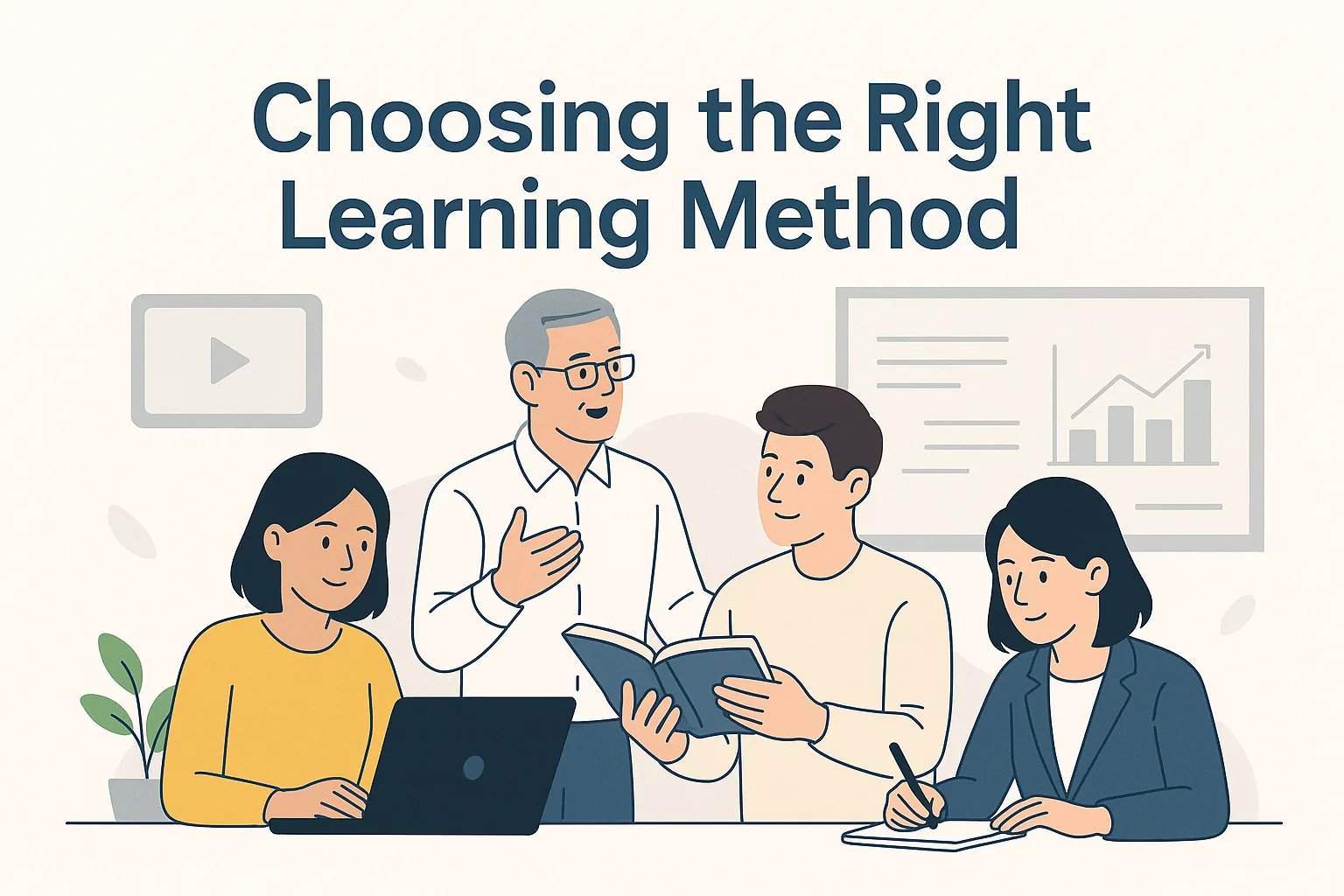
Learning Methods: How to Choose the Right Approach

Organizations have access to numerous learning methods: classroom training, coaching, mentoring, e-learning, on-the-job learning, and more. The challenge isn’t finding options. It’s choosing what actually works for your situation.

No learning method is universally superior. A method that’s perfect for onboarding new hires might be terrible for leadership development. Effectiveness depends entirely on matching the method to your context, learners, and what you’re trying to teach.

Why This Matters

Wrong method choices waste money and fail to build capability. Putting people in a classroom to learn a skill they need to practice hands-on frustrates everyone and produces minimal results. Using expensive one-on-one coaching to share information that could reach hundreds through a single online course is inefficient. Requiring in-person attendance when people could learn effectively online reduces participation unnecessarily.

Method selection also determines whether people actually complete learning. Programs that fit their schedules and circumstances get used. Those that don’t get ignored, regardless of content quality.

Types of Learning Method

The Common Learning Methods for Organizations

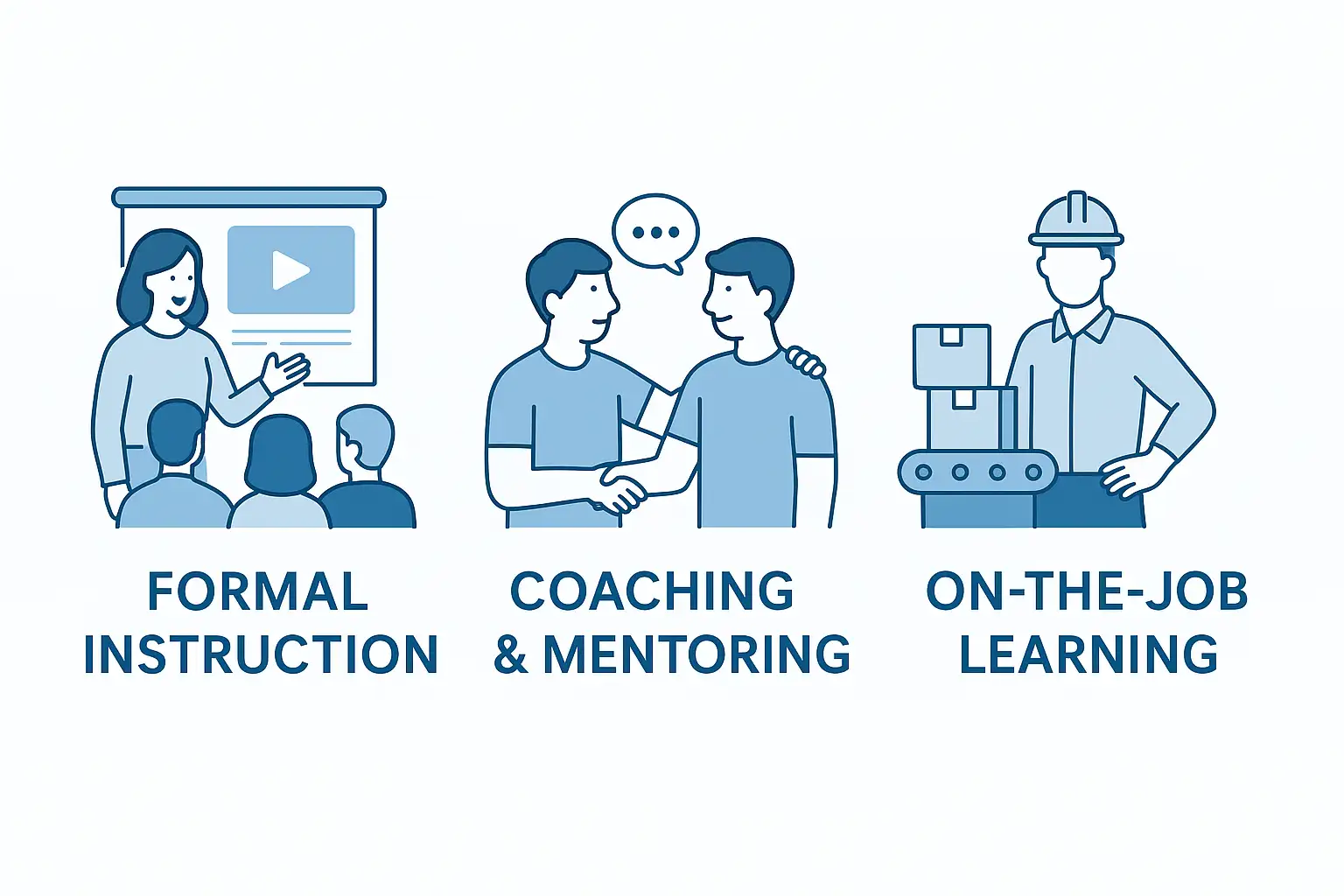
Formal instruction brings groups together for structured learning, either in person or online. Use this when you need to share important information with many people simultaneously or meet compliance requirements.

Coaching involves guided conversations where individuals identify their own solutions to work challenges. It works for people taking on new responsibilities or addressing specific performance issues.

Mentoring pairs less experienced people with seasoned professionals who provide career advice and guidance. It’s valuable for career development and helping underrepresented individuals build networks and skills.

On-the-job learning happens during regular work through intentional practice, often alongside experienced colleagues. This is how most technical and practical skills are actually acquired.

Team and network learning occurs through professional networks, communities of practice, and interactions with colleagues, customers, and suppliers. It’s useful when important knowledge is held by people rather than written in manuals.

E-learning uses technology for training delivery, offering flexibility in timing and location. It ranges from structured online courses to video conferencing and collaboration tools.

Reflective learning encourages people to analyze their experiences and identify what they learned and what they need to improve.

Leader role modeling happens when people observe and imitate effective behaviors demonstrated by managers and leaders.

How to Select the Right Learning Methods

The learners themselves. Educational background, job role, experience level, language, and culture affect what methods work. New employees need different approaches than veterans. Technical specialists learn differently than salespeople.

What you’re teaching. Compliance training suits formal instruction or e-learning that reaches many people consistently. Leadership development needs coaching and mentoring. Technical skills require hands-on practice in real contexts.

Your organizational constraints. Budget, time, geographic spread, and existing technology determine what’s feasible. Small organizations with limited budgets rely more on on-the-job learning. Large, dispersed companies invest in e-learning platforms.

Your workplace environment. Can people step away for training? Is there psychological safety to make mistakes while learning? These realities affect which methods will actually work.

Why Blended Learning Methods Work Better

Combining different approaches, called blended learning, addresses the reality that people learn complex capabilities through multiple experiences, not single events.

A leadership program might include online modules for frameworks, group workshops for discussion, individual coaching for application, and peer learning groups for ongoing support. Each method serves a different purpose, and together they create more complete development than any single approach could.

Technology enables more blending options. Online learning reaches distributed teams. Collaboration tools support peer learning across locations. Virtual platforms enable remote mentoring and coaching.

Making Smart Choices

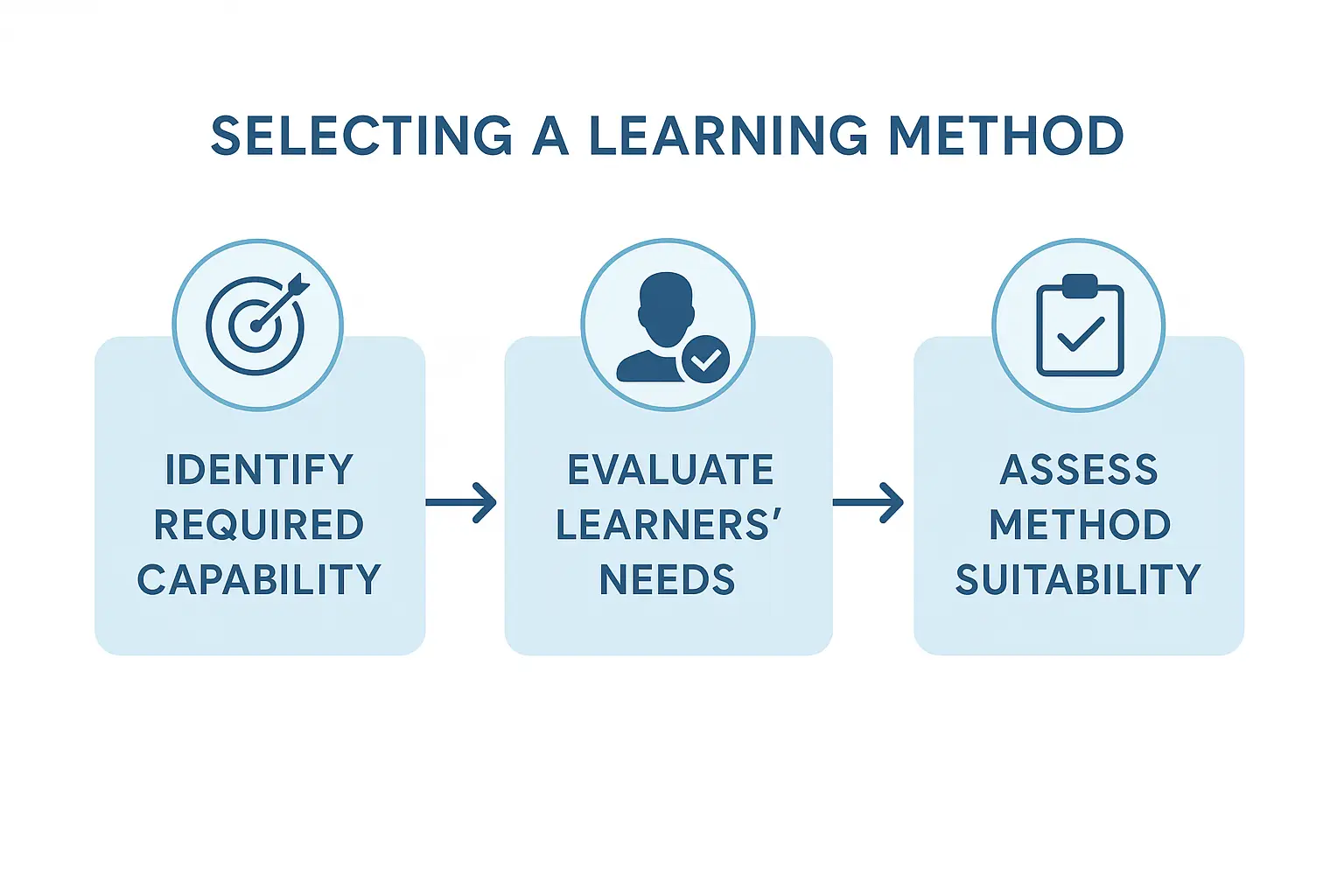
Start with what capability you need to build. Knowledge requires different methods than skill development or behavior change.

Consider who’s learning. What are their starting points, constraints, and how they learn best?

Be honest about resources. What budget, time, technology, and internal expertise do you actually have?

Evaluate fit for purpose. Just because e-learning is cheaper doesn’t mean it’s appropriate for what you’re teaching. Just because classroom training is familiar doesn’t mean it’s effective.

When using technology, ensure it genuinely serves learning rather than creating barriers. Platforms should be accessible and user-friendly, not frustrating obstacles.

How to select right learning method

Common Selection Mistakes

Choosing learning methods before defining learning objectives forces content into inappropriate formats. Starting with “we’ll do a workshop” then figuring out what to teach rarely produces good results.

Defaulting to familiar methods regardless of fit limits effectiveness. If you only know how to deliver classroom training, you’ll use it for everything, even when other methods would work better.

Ignoring learner constraints causes low participation. Requiring in-person attendance from people with inflexible schedules or requiring self-paced discipline from people who need structure sets up failure.

Assuming technology always works better or is always cheaper often backfires. Some learning genuinely benefits from face-to-face interaction or hands-on practice.

Building Method Selection Capability

Organizations develop this capability by expanding beyond default approaches. If you’ve always used classroom training, experiment with coaching or peer learning. If you’ve relied on e-learning, consider when in-person interaction would produce better outcomes.

Monitor results honestly. If completion rates are low, skills aren’t transferring to work, or feedback is consistently negative, the method likely doesn’t fit, regardless of how well-designed the content is.

Learn from what works. When a particular method produces strong results for certain types of learning, understand why and apply those insights elsewhere.

The Bottom Line

Method selection determines whether development investments build needed capability or just consume budget while producing minimal results. Organizations that choose thoughtfully based on actual context and needs develop their people more effectively than those defaulting to familiar approaches or following trends.

Image By : Chat GPT

Want to build systematic learning and development into your human capital management? Learn how BPTW certification helps organizations create structured approaches to employee development.

Upcoming Webinar : Learn About BPTW – Best Place to Work

Join our upcoming webinar to learn how BPTW certification can help your organization build structured people systems that drive business success.

Date:

10th september 2025

Time:

4.00 PM - 4.30PM IST