Human Capital Reporting: How To Evaluate Workforce Performance

Human Capital Reporting is no longer a “nice to have” HR activity. It has become a core mechanism through which organizations evaluate whether their workforce can sustain performance, manage risk, and support long-term strategy.

At BPTW Best Place To Work®, Human Capital Reporting is assessed as part of certification against the HCM 3000 Standard, a structured human capital management framework. Within this standard, reporting and evaluation of human capital performance is embedded into the system rather than treated as a standalone disclosure exercise. The approach aligns with international guidance, including ISO 30414, while remaining grounded in operational reality.

What Human Capital Reporting Really Means

Human capital includes the cumulative knowledge, skills, and abilities of an organization’s people, and the impact those capabilities have on long-term performance and competitive advantage.

Human Capital Reporting (HCR) is the structured process of measuring, analyzing, and evaluating this contribution. It goes beyond counting employees or reporting costs. Instead, it asks whether people systems are producing the outcomes the organization depends on.

When done properly, HCR helps leadership answer uncomfortable but essential questions about workforce readiness, capability gaps, and sustainability.

Why Organizations Struggle With Human Capital Visibility

Most organizations already collect people’s data. The problem is not availability, but usefulness.

Metrics are often fragmented across departments, inconsistent over time, or disconnected from decision-making. Reporting becomes descriptive rather than evaluative, telling leaders what happened but not what it means.

This is why Human Capital Reporting must be anchored in a management system. Without structure, reporting becomes administrative noise rather than strategic insight.

Why Human Capital Reporting Often Fails in Practice

Many Human Capital Reporting efforts fail not because organizations lack intent, but because reporting is treated as an output rather than a capability. Data is produced for periodic review, yet no ownership exists for interpretation or follow-up action.

Another common failure is metric overload. Organizations attempt to report everything they can measure instead of focusing on what is material to performance and risk. This creates noise rather than insight and reduces confidence in the reporting process.

Effective Human Capital Reporting requires discipline. Metrics must be stable over time, clearly defined, and explicitly linked to decisions. Without this connection, reporting becomes an isolated exercise that satisfies documentation needs but does not improve workforce outcomes.

Human Capital Reporting Within HCM 3000

Under the HCM 3000 Standard, Human Capital Reporting is addressed within Clause 9: Performance Evaluation. Organizations are required to determine what human capital elements must be monitored and measured, how data is collected and analyzed, and how results are evaluated.

The intent is not public disclosure for its own sake. The intent is governance.

Organizations certified by BPTW must demonstrate that human capital performance is evaluated systematically, supported by documented evidence, and used to assess the effectiveness of the human capital management system.

ISO 30414 is referenced within HCM 3000 as a guidance source for metrics and reporting areas, ensuring global alignment without forcing a rigid checklist.

What Gets Reported and Why It Matters

Human Capital Reporting focuses on areas that materially affect organizational performance and sustainability.

These commonly include workforce availability, skills and capabilities, recruitment and turnover, productivity, leadership capacity, organizational culture, and employee well-being. The value lies not in reporting everything, but in reporting what actually influences outcomes.

For example, skills and capability reporting highlights whether the workforce can support future strategy. Turnover metrics reveal stability or hidden retention risks. Productivity indicators help distinguish between performance issues caused by system design versus workforce capability.

From Measurement to Evaluation

Measurement alone does not equal reporting.

Under structured frameworks like HCM 3000, organizations are expected to analyze results, identify trends, and evaluate whether human capital performance is effective. This evaluation feeds directly into management review and improvement actions.

This is where many organizations fail. Data is collected but not interpreted. Evaluation turns numbers into decisions.

Human Capital Reporting becomes valuable only when it influences workforce planning, capability development, and risk mitigation.

Human Capital Reporting as a Leadership Responsibility

Human Capital Reporting is often delegated to HR functions, but its implications extend far beyond HR accountability. Workforce capability, leadership depth, and organizational health directly influence strategic execution and operational resilience.

When senior leaders actively engage with human capital insights, reporting shifts from compliance to governance. Leaders are better able to challenge assumptions about capacity, identify structural workforce risks, and assess whether people systems are enabling or constraining strategy.

Within the HCM 3000 framework, this leadership involvement is essential. Evaluation of human capital performance is expected to inform management review, resource allocation, and improvement actions. Without leadership ownership, reporting loses credibility and impact.

Internal and External Reporting Considerations

Not all human capital information serves the same purpose.

Internal reporting supports leadership oversight and operational decisions. External reporting supports transparency for stakeholders such as investors, regulators, and prospective employees. ISO 30414 recognizes this distinction and allows flexibility in how information is presented.

Under BPTW certification, organizations must demonstrate clarity around this distinction and consistency in definitions and metrics, even if reporting formats differ.

Risk, Opportunity, and Workforce Sustainability

One of the strongest reasons to implement Human Capital Reporting is risk visibility.

Workforce-related risks often develop quietly. Skill obsolescence, leadership gaps, unhealthy workloads, or dependency on critical roles may not appear in financial reports until damage is already done.

By reporting on these areas consistently, organizations gain early warning signals. This supports proactive intervention rather than reactive correction, strengthening long-term workforce sustainability.

Principles That Make Human Capital Reporting Work

Effective Human Capital Reporting follows a few essential principles.

Metrics must align with organizational strategy and values. Measurement approaches must be practical and proportionate to the organization’s size and complexity. Data must be reliable enough to support decisions, not just dashboards.

Comparability over time matters more than perfection. Narrative context helps stakeholders understand why metrics matter and what actions are being taken.

Above all, reporting must lead to improvement. If it does not, it is not Human Capital Reporting. It is documentation theatre.

The Role of BPTW Certification

BPTW certifies organizations against the HCM 3000 Standard, assessing whether human capital reporting and evaluation are embedded into the management system rather than treated as an isolated HR activity.

Certification focuses on evidence, consistency, and effectiveness. The objective is not to rank organizations, but to validate disciplined people management practices that support performance and governance.

Human Capital Reporting, in this context, becomes a tool for leadership accountability rather than external optics.
Workforce Characterization: Defining Work and Workers

Matching the right people to the right work sounds simple. In practice, it’s impossible without clear definitions of what work requires and what workers can do.

Workforce characterization solves this problem. It’s the systematic process of defining work requirements and worker capabilities so organizations can make informed allocation and planning decisions.

Without this practice, resource decisions rely on informal knowledge, memory, and guesswork. With it, you have structured data that enables consistent, fair, and efficient matching of people to work.

What Workforce Characterization Actually Means

Workforce characterization encompasses two interconnected activities: defining work and defining workers.

Characterization specifies what needs to be done, when, where, and what capabilities are required. Worker characterization documents who is available, what they can do, and under what constraints they operate.

Together, these create the foundation for effective resource allocation, capacity planning, and workforce management. Organizations can’t optimize what they haven’t clearly defined.

Workforce Characterization : Three Approaches

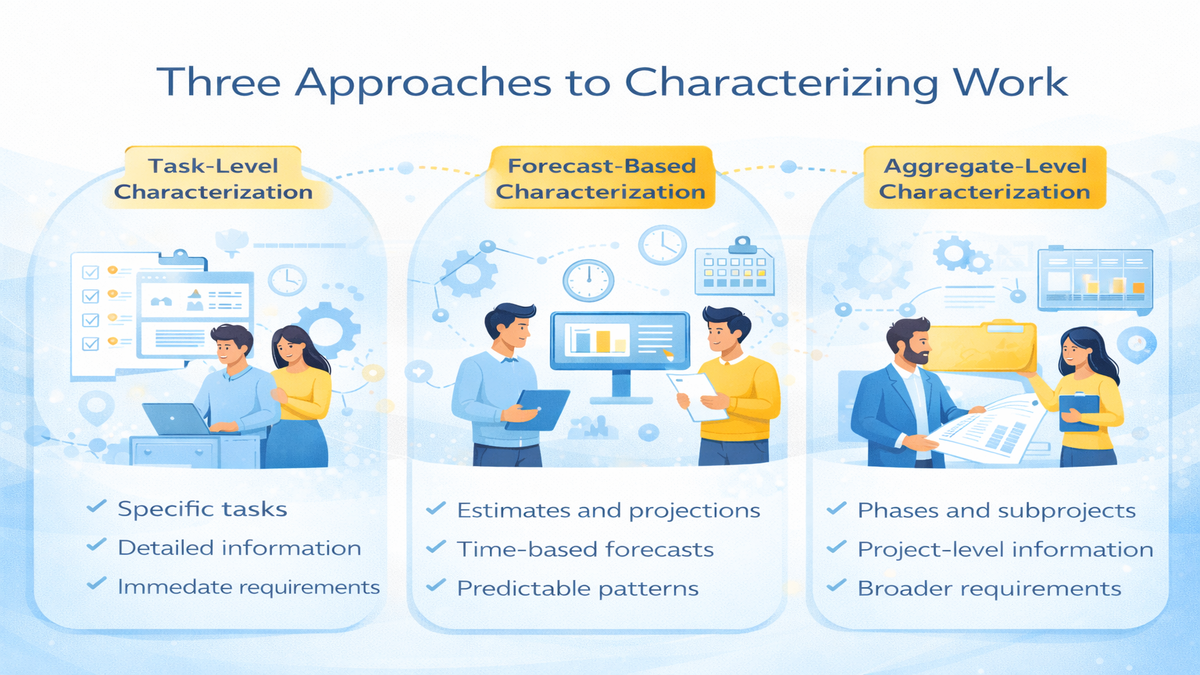
Three Approaches to Characterizing Work

Work can be defined at different levels depending on your needs and how much detail is known.

Task-Level Characterization

Tasks represent the lowest level of explicitly allocated work. Below task level, workers decide their own execution approach.

Tasks emerge from breaking down larger work (projects, phases, deliverables) or directly from business drivers. Train schedules create tasks for train drivers. Customer orders create tasks for delivery teams.

Task-level information includes:

  • Work name, description, and identifier
  • Start and finish timing (shifts, execution windows, immediate requirements)
  • Completion deadlines (milestones, due dates)
  • Required roles, skills, and proficiency levels
  • Demand quantified in hours or FTE
  • Location requirements (customer sites, delivery locations)
  • Physical requirements (mobility needs, physicality)

This detailed characterization of workforce enables precise matching of specific capabilities to specific requirements.

Forecast-Based Characterization

When specific tasks aren’t known in advance, work can be characterized through estimates and forecasts.

Call centers forecast call volumes by hour without knowing individual call details. Retail stores forecast customer traffic by day without knowing specific transactions.

Forecast information includes:

  • Time periods (hour, day, week)
  • Required roles, skills, and proficiencies
  • Demand expressed period-by-period in FTE, minutes, or hours
  • Relevant matching attributes (location, mobility, physicality)

This characterization approach suits predictable demand patterns where specific work details emerge later.

Aggregate-Level Characterization

Work can also be characterized above task level: subprojects, phases, deliverables, entire shifts.

Large projects might allocate resources at phase level rather than individual tasks. Operations might staff entire shifts rather than specific activities within those shifts.

Aggregate information includes:

  • Aggregate name, description, and identifier
  • Required roles, skills, and proficiencies
  • Demand appropriate for the aggregate level
  • Matching attributes applicable at this level

This supports characterization when detailed breakdown isn’t necessary or practical for decision-making.

Special Cases in Work Characterization

Some scenarios don’t fit standard workforce characterization patterns.

Unconstrained work exists when delivery time isn’t fixed or demand hasn’t been estimated. If managers are confident outcomes will be achieved, they can match work to workers using judgment rather than formal characterization.

A sales team with abundant opportunities might simply work through prospects in priority order. No need to characterize every potential sales conversation in advance.

Real-time business drivers require dynamic workforce characterization. Train schedules, delivery traffic, customer arrivals create work in real-time. Characterization must adapt to live information rather than advance planning.

This connects to broader workforce planning that determines overall capacity needs even when specific work characterization happens closer to execution.

Special Cases in Workforce Characterization

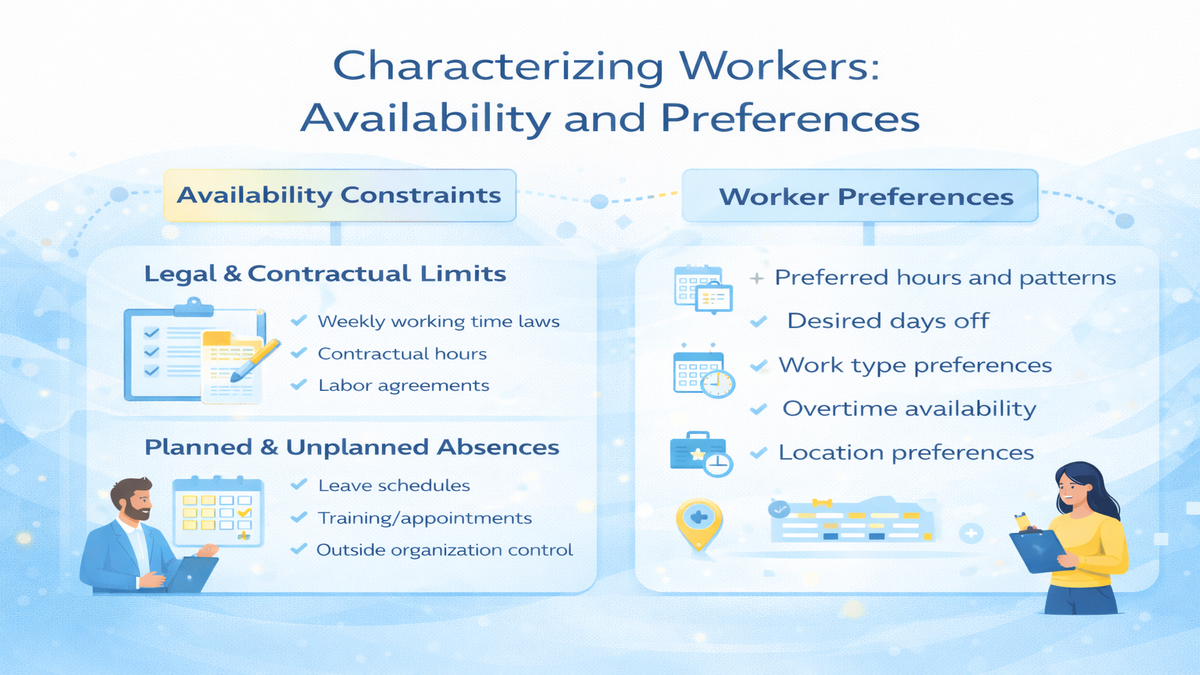
Characterizing Workers: Availability and Preferences

Effective characterization of workforce requires equally clear definition of worker attributes.

Availability Constraints

Worker availability is constrained by multiple factors that workforce characterization must capture:

Legal and contractual limits:

  • Maximum weekly working time laws
  • Employment contract specifications (full-time, part-time hours)
  • Labor agreements for contingent workers
  • Individual working time agreements

Planned and unplanned absences:

  • Annual leave schedules
  • Training commitments
  • Illness and medical appointments
  • Other absences outside organizational control

Flexibility elements:

  • Relief shift availability
  • Stand-by duty arrangements
  • On-call commitments

Availability information in workforce characterization doesn’t need more precision than work information. If work is planned weekly, hourly availability detail is unnecessary.

Previous allocations reduce actual availability. If someone is assigned 30 hours, they have less capacity remaining. Workforce characterization systems must track cumulative allocation.

Worker Preferences

Workers may indicate preferences that this practice should document:

  • Preferred working hours and patterns
  • Desired days off
  • Work type preferences
  • Overtime availability
  • Location preferences

Organizations decide which preferences influence allocation decisions. Not all preferences can drive assignments, but documenting them enables consideration where appropriate.

This aspect of workforce characterization supports positive candidate experience that extends beyond hiring into ongoing work assignment.

Characterizing Workers: Skills and Restrictions

Roles and Capabilities

Workers should be segmented by roles and skills in workforce characterization systems.

Within segments, differentiate further by:

  • Experience levels and tenure
  • Equipment and machinery knowledge
  • Proficiency or skill ratings
  • Past performance records
  • Required authorizations and certificates

This granularity enables workforce characterization that matches not just general skills but appropriate expertise levels to work complexity.

Restrictions and Accommodations

Some workers face restrictions that workforce characterization must document and respect.

Regulatory restrictions: Pregnant workers who cannot work irregular hours. Age restrictions for certain work types. Licensed requirements for specific activities.

Physical restrictions: Temporary or permanent limitations affecting mobility, lifting, sensory requirements, or cognitive demands.

Privacy and legal considerations: Data protection laws and labor agreements constrain what information can be collected and how it’s used in workforce characterization.

Collection and use of restriction information must be equitable, respectful, and privacy-compliant. Systems should enforce restrictions automatically rather than relying on manual oversight.

Location and Mobility in Workforce Characterization

Geographic factors often matter for matching work to workers.

Document workers’ base locations, current locations (for mobile workers), and mobility capabilities (willingness and ability to travel).

Match location requirements in work characterization to location attributes in worker profiles. Don’t assign site work to workers without transportation. Don’t assign travel to workers with mobility constraints.

Capturing Additional Attributes

Specific contexts may require additional workforce characterization beyond standard categories.

Airport security might need gender diversity for screening. Customer-facing work might need language capabilities. Sensitive projects might require security clearances.

Capture attributes needed for your workforce characterization decisions, but avoid collecting unnecessary data that creates privacy concerns without adding value.

Making Workforce Characterization Practical

Effective workforce characterization balances comprehensiveness with practicality.

Start with essential attributes. Don’t characterize everything theoretically possible. Focus on factors that actually drive allocation and planning decisions in your organization.

Maintain current information. Workforce characterization loses value when data becomes stale. Update availability, skills, and preferences as changes occur.

Respect privacy and fairness. Collect and use worker information equitably. Ensure workforce characterization doesn’t enable discriminatory decisions.

Enable self-service where appropriate. Let workers update their own preferences, availability, and certain attributes rather than requiring manual data entry by administrators.

This systematic approach supports comprehensive workforce allocation that treats resource distribution as strategic capability.

Conclusion

Workforce characterization transforms resource management from informal knowledge into structured capability.

Organizations that clearly define work requirements and worker attributes make consistently better allocation and planning decisions. They match skills to needs accurately, respect constraints, and optimize utilization.

Start by determining what level of work characterization serves your needs: tasks, forecasts, or aggregates. Then document worker attributes that matter: availability, skills, restrictions, and preferences.

With clear workforce characterization, resource decisions become systematic, fair, and effective rather than subjective and inconsistent.

Images by : Chat GPT

Ready to implement structured workforce characterization as part of comprehensive human capital management? Learn how BPTW certification provides frameworks for systematic people management.

Employee Engagement: Meaning, Importance, and Impact

Your organization hosts pizza Fridays, game nights, and team-building activities. Everyone seems to enjoy them. Yet turnover remains high, productivity hasn’t improved, and people still seem disconnected from their work.

Here’s why: those activities aren’t employee engagement. They’re perks. Real employee engagement goes much deeper and delivers far greater business impact.

Understanding what employee engagement actually means, and what it isn’t, matters because organizations that get this right see measurably better performance, retention, and results.

Within structured human capital frameworks such as HCM 3000, aligned with ISO 23326, employee engagement is treated as a measurable workforce outcome rather than a cultural initiative.

BPTW Best Place To Work® evaluates engagement maturity based on how systematically these principles are embedded, governed, and sustained.

What Employee Engagement Actually Is

Employee engagement reflects how connected people feel to their work, their team, and their organization’s purpose. It’s about employees being mentally and emotionally invested in what they do and committed to organizational success.

This isn’t about happiness or satisfaction alone. You can have satisfied employees who show up, do the minimum required, and leave. Satisfaction means people don’t actively dislike their job.

Engagement means something entirely different. Engaged employees care about outcomes beyond their paycheck. They invest discretionary effort—the extra thinking, creativity, and initiative that drives real performance.

The distinction matters. Satisfied employees do their job. Engaged employees make their organization better.

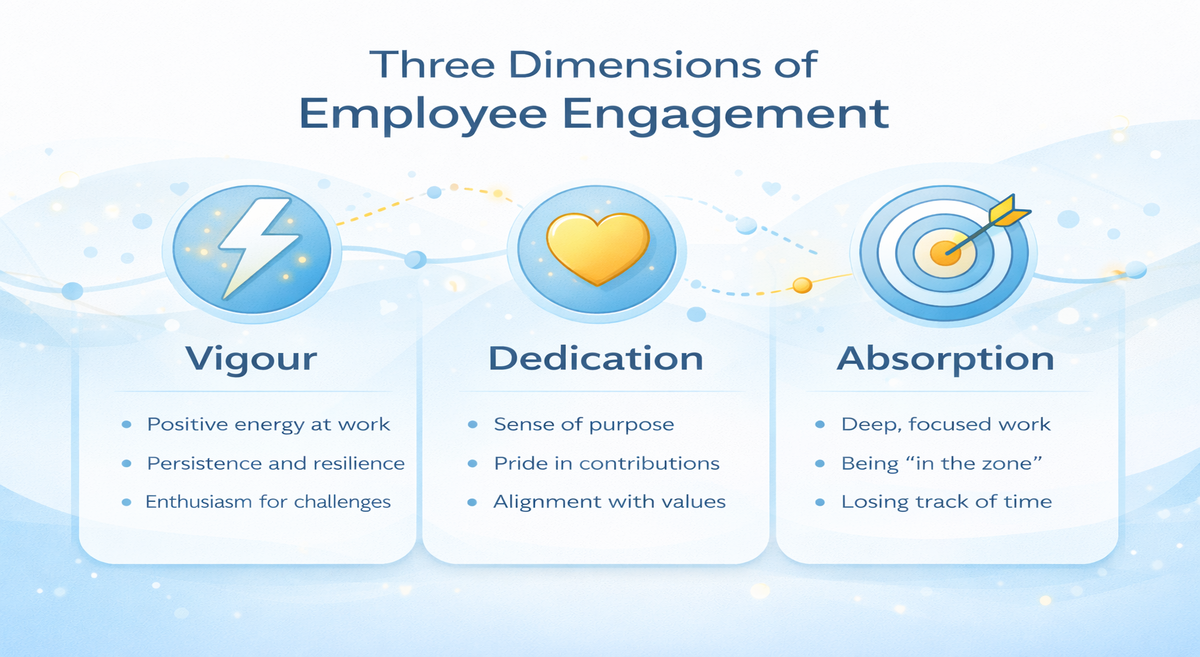
Employee engagement framework showing vigor dedication and absorption at work

The Three Dimensions of Employee Engagement

Research identifies three specific characteristics that define engagement in practice.

Vigor

Vigor refers to high levels of energy and mental resilience while working. Engaged employees bring sustained enthusiasm to their roles. They willingly invest effort even when work gets challenging.

This isn’t about working longer hours. It’s about the quality of energy people bring to their time at work. Vigour shows up as:

  • Mental alertness and focus during tasks
  • Persistence when facing obstacles
  • Willingness to tackle difficult challenges
  • Resilience when setbacks occur

People with high vigor don’t just push through their day. They actively engage with problems and opportunities as they arise.

Dedication

Dedication means being strongly involved in work and experiencing it as meaningful. Dedicated employees find purpose and significance in what they do. They feel proud of their contribution.

This dimension of engagement connects work to personal values and professional identity. Dedicated employees:

  • View their work as meaningful beyond just earning money
  • Feel proud of what their organization accomplishes
  • Connect their role to larger purposes they care about
  • Experience work as a source of professional fulfillment

Dedication transforms work from “just a job” into something that matters personally.

Absorption

Absorption describes being fully concentrated and engrossed in work. Time passes quickly. Focus comes naturally. Work captures full attention without feeling draining.

This is the “flow state” researchers describe when people lose themselves productively in their tasks. Absorbed employees:

  • Concentrate deeply without constant distractions
  • Find work naturally engaging rather than tedious
  • Experience time passing quickly while working
  • Feel energized rather than depleted by focused work

All three dimensions work together. Engagement isn’t just one of these characteristics. It’s the combination of vigor, dedication, and absorption that creates true engagement.

Why Employee Engagement Matters

Organizations with higher engagement levels consistently outperform those with lower engagement.

This advantage appears across productivity, retention, customer outcomes, and innovation.

Performance and productivity improve. Engaged employees don’t just complete assigned tasks. They find better ways to work, identify opportunities for improvement, and solve problems proactively. This drives measurably higher productivity than disengaged workers produce.

Retention increases significantly. Engaged employees don’t constantly search for other opportunities. They’re committed to their organization’s success and less likely to leave. This reduces turnover costs and preserves institutional knowledge.

Customer service strengthens. When employees care about outcomes, customers notice. Engaged workers provide better service because they’re genuinely invested in customer success, not just going through required motions.

Innovation happens more naturally. Engaged employees contribute ideas, spot opportunities, and suggest improvements. They care enough to think about how things could work better rather than just accepting how things are.

Organizational sustainability improves. Companies with engaged workforce adapt better to change, execute strategy more effectively, and build sustainable competitive advantages. Employee engagement becomes a strategic differentiator.

What Employee Engagement Is NOT

This is where many organizations get confused. Several things that seem like employee engagement actually aren’t.

Employee engagement is not employee satisfaction. Satisfied employees might be perfectly happy doing the minimum. They’re not dissatisfied, but they’re not investing discretionary effort either. Satisfaction is passive. Engagement is active.

Employee engagement is not just activities and perks. Fun Fridays, free snacks, game rooms, and social events can support engagement, but they don’t create it. These are nice additions, not the foundation. Organizations can have all these perks and still have deeply disengaged employees.

Employee engagement is not just about happiness. Happy employees might love their coworkers and enjoy coming to work without being engaged in the actual work itself. Engagement specifically involves connection to work purpose and outcomes.

Employee engagement is not something you do TO employees. It’s not a program you implement or an initiative you roll out. Real employee engagement emerges from conditions organizations create—conditions where people can be engaged. It’s something employees choose to give when the environment supports it.

Understanding these distinctions prevents wasting resources on surface-level activities that don’t address actual employee engagement drivers.

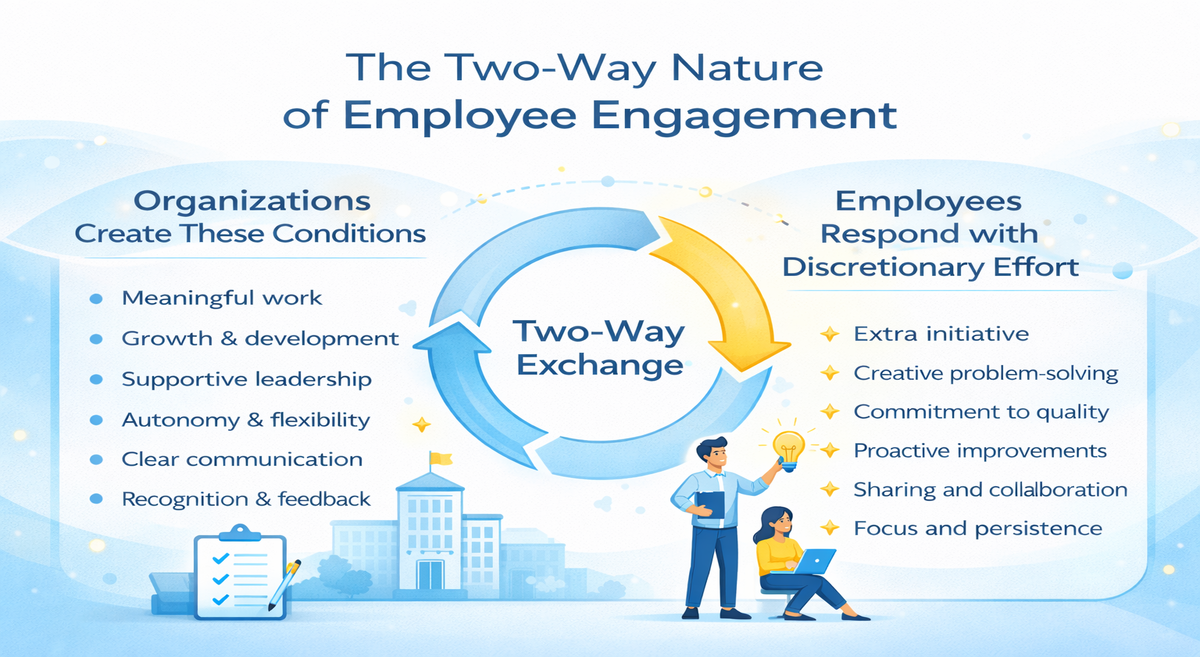
Two-way employee engagement exchange between organization support and employee commitment

The Two-Way Nature of Engagement

Here’s the critical insight many organizations miss: This practice is a two-way exchange, not something organizations demand from employees.

Organizations create conditions that make engagement possible. These include:

  • Meaningful work that connects to larger purposes
  • Autonomy in how people accomplish their responsibilities
  • Opportunities for growth and development
  • Supportive leadership that values contributions
  • Clear communication about expectations and direction
  • Recognition for achievements and efforts

When organizations provide these conditions, employees respond by freely offering discretionary effort—the extra initiative, creativity, and commitment that drives superior performance.

The key word is “freely”. You cannot mandate employee engagement. Employees choose to engage when the work environment makes engagement worth their investment.

Organizations that try to extract engagement through pressure or demands create the opposite effect. People disengage when they feel used rather than valued.

This two-way exchange distinguishes engagement from simple compliance. Compliance can be required. Engagement must be earned through creating environments where people want to invest themselves.

Engagement as Strategic Priority

Forward-thinking organizations treat employee engagement as a strategic priority, not an HR program. They recognize that workforce engagement directly impacts their ability to execute strategy, serve customers, and compete effectively.

Senior leadership ownership typically includes:

  • Making engagement a board-level metric
  • Embedding engagement measures into workforce planning
  • Allocating resources through structured frameworks such as HCM 3000

Most importantly, all organizational stakeholders play roles in strengthening engagement; leaders who create supportive environments, managers who enable daily engagement, HR experts who design supportive systems, and employees themselves who choose to engage when conditions support it.

Within HCM 3000, employee engagement is governed as a structured workforce outcome aligned with ISO 23326, ensuring engagement data informs planning, risk, and sustainability decisions.

BPTW Best Place To Work® evaluates how consistently organizations apply these principles, moving engagement beyond activities into measurable human capital governance.

Images By: Chat GPT

Learning Evaluation: Essential Guide to Training Success

Your organization just spent three months training the sales team on a new consultative approach. Everyone attended. The feedback forms were positive.

Six months later, sales numbers haven’t budged. People are selling exactly the same way they always have. What went wrong?

This scenario plays out constantly. Organizations measure training activity instead of impact. They count attendance and satisfaction scores, then wonder why performance doesn’t improve.

The problem isn’t that training doesn’t work. The problem is measuring the wrong things. Real learning evaluation answers the question that actually matters: did this training change anything important?

Understanding Learning Evaluation

Learning evaluation compares expectations to reality. Before training, you have goals and desired outcomes. After training, evaluation reveals whether those outcomes materialized and why.

This sounds simple but gets confused with assessment, which is different.

Assessment focuses on individuals:

  • Did Maria understand the new framework?
  • Can Tom demonstrate the technique?
  • What did each person learn?

Learning evaluation focuses on impact:

  • Are people using new skills with customers?
  • Have conversations with clients changed?
  • Are deals closing differently?

The sales team might have learned perfectly. But if they’re not applying it, if deals aren’t closing differently, the training didn’t deliver organizational value.

Both perspectives matter. Assessment tells you if training transferred knowledge. Learning evaluation tells you if that transfer mattered to business results.

Three Questions Learning Evaluation Must Answer

Question 1: Do Original Goals Still Make Sense?

Learning needs often shift during programs. Business priorities change mid-course. Market conditions evolve. Individual roles transform.

Sometimes the most valuable learning wasn’t what you originally planned. It emerged from unexpected participant interactions or realizations during training.

Rigid learning evaluation that only measures original objectives misses valuable unplanned outcomes. Flexible evaluation asks whether current outcomes align with current needs, not just initial plans.

Question 2: How Effective Were the Processes?

Even when training achieves desired results, understanding how matters for repeating success.

Process questions to examine:

  • Were training formats appropriate for the content?
  • Did timing work for participants’ schedules?
  • Were resources adequate for effective learning?
  • Did delivery methods engage people?

Process learning evaluation reveals whether to repeat similar approaches or modify them. Perfect execution of a flawed approach signals the need for different methods entirely.

Question 3: What Actually Changed?

This is where learning evaluation delivers greatest value. What’s different now compared to before training?

Vague answers don’t cut it:

  • ❌ “People understand concepts better”
  • ❌ “Awareness increased”
  • ❌ “Engagement improved”

Real change looks like:

  • ✓ Employees making different decisions
  • ✓ New methods for approaching problems
  • ✓ Collaboration happening in new ways
  • ✓ Measurably better results

Without observable change, training consumed time and money without delivering value.

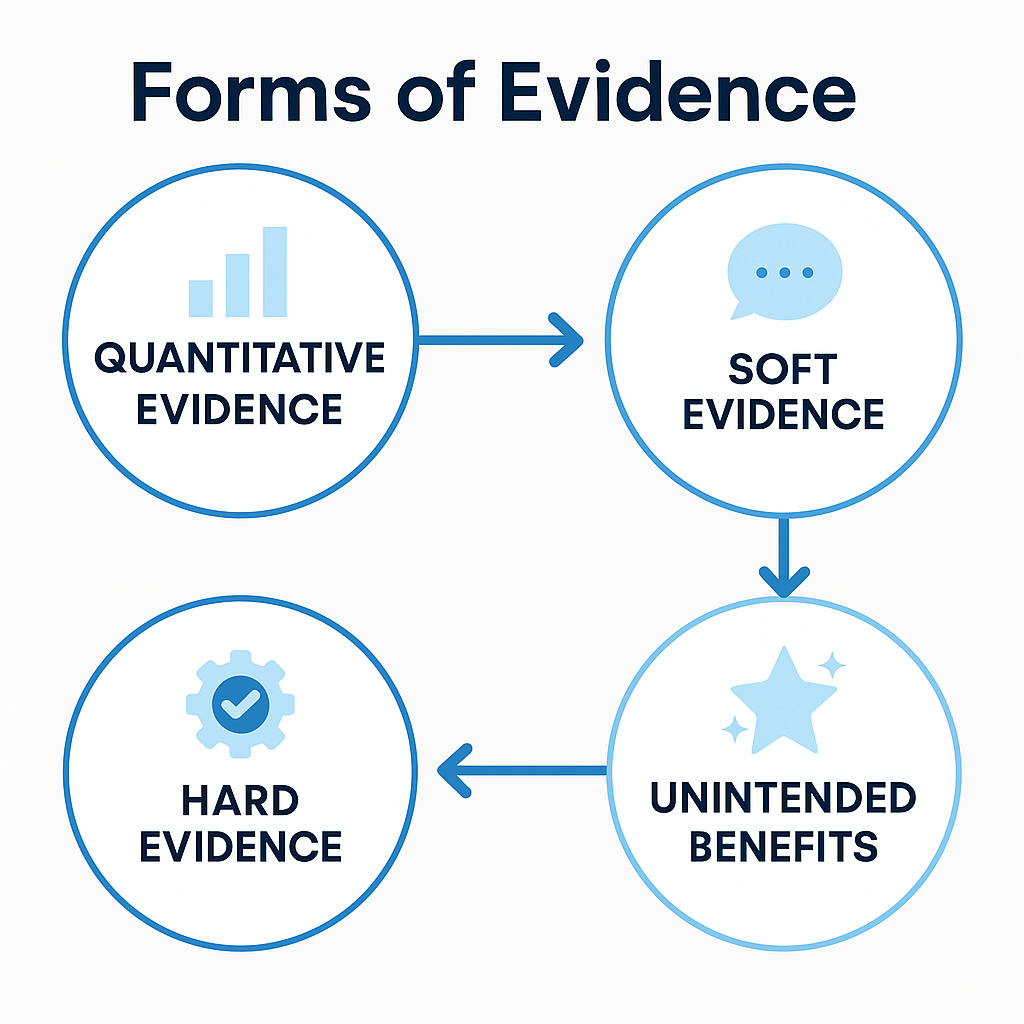
Learning evaluation evidence visuals

Evidence That Reveals the Truth

Learning evaluation requires both numbers and stories. Quantitative metrics provide measurable proof. Qualitative insights explain how and why change happened.

Quantitative Evidence for Learning Evaluation

Business metrics:

  • Productivity improvements in specific areas
  • Quality measurements showing fewer errors
  • Safety incident reductions after training
  • Customer satisfaction score increases

HR and talent metrics:

  • Time to competence for new hires
  • Promotion rates among trained employees
  • Retention improvements in trained groups
  • Reduced recruitment costs

Performance indicators:

  • Revenue impact where directly measurable
  • Efficiency gains in processes
  • Cost reductions from improved methods

These numbers show what changed and by how much.

Qualitative Evidence for Learning Evaluation

Direct stakeholder feedback:

  • Structured interviews with participants and managers
  • Focus groups discussing real application examples
  • Observations of how people work differently

Real-world stories:

  • How someone applied learning to solve a problem
  • Examples of improved decision-making
  • Innovation sparked by training insights

Behavioral changes:

  • New approaches to routine tasks
  • Different collaboration patterns
  • Changed problem-solving methods

Stories explain what the numbers mean. A 15% productivity increase is just a statistic. The story of how an employee used new skills to redesign a workflow brings that statistic to life.

Effective learning evaluation combines both. Numbers provide credibility and scale. Stories provide understanding and context.

Practical Learning Evaluation Framework

While no single approach fits every situation, certain questions provide structure for effective learning evaluation across different contexts.

Speed and capability questions:

  • How quickly do new hires reach acceptable competence levels?
  • What percentage of employees operate at target performance?
  • How fast do people acquire new skills for emerging business needs?

Performance and effectiveness questions:

  • What do customer satisfaction trends indicate about training impact?
  • How successfully are people sharing knowledge across teams?
  • What performance data suggests about skill application?

Talent development questions:

  • What percentage of trained employees earn promotions?
  • How much does reliance on external recruitment decrease?
  • Are trained employees retained better than others?

Operational impact questions:

  • What do productivity and safety data reveal?
  • How effectively do teams collaborate across functions?
  • What quality improvements can be measured directly?

These questions reveal whether training delivers value beyond checking completion boxes. They connect learning evaluation to outcomes that matter for business success.

Making Learning Evaluation Actually Useful

Learning evaluation fails when it becomes bureaucratic paperwork that nobody uses. Make it practical by following these principles.

Define success before training starts. Establish clear criteria everyone understands. Include both measurable outcomes and qualitative indicators. This prevents moving goalposts and provides objective evaluation standards.

Involve multiple perspectives. Training impacts various people. Gather input from participants, their managers, team members who work with them, and anyone affected by performance changes. Multiple perspectives reveal complete impact.

Communicate findings clearly. Dense reports that nobody reads waste evaluation effort. Share insights through brief summaries, visual dashboards showing key metrics, short case studies highlighting successes, and action-oriented recommendations.

Focus evaluation resources strategically. Don’t try evaluating everything exhaustively. Concentrate where training is most critical to business success, significant resources were invested, or questions exist about effectiveness.

Track patterns over time. Single data points tell incomplete stories. Monitor trends across multiple initiatives to identify what consistently works, which methods show limited effectiveness, and whether improvements sustain over time.

Capture unexpected benefits. Sometimes the most valuable outcomes weren’t planned. Stay alert to unplanned performance improvements, new collaboration patterns, or innovation sparked by bringing people together.

Using Learning Evaluation to Improve

Learning evaluation only matters when it drives better decisions. Use findings strategically.

When certain methods consistently produce stronger results in your learning evaluation data, increase their use. When approaches show limited impact, modify or eliminate them.

Direct training budgets toward programs delivering measurable returns. Reduce investment in activities showing weak results.

Process feedback from learning evaluation reveals what works in structure, timing, delivery methods, and support mechanisms. Apply these insights to future program design.

Identify facilitators delivering best outcomes. Learn from their practices and engage them for critical programs.

Sometimes learning evaluation reveals that poor outcomes result from organizational factors rather than program quality. Inadequate manager support, conflicting priorities, or lack of time to apply learning undermines effectiveness. Address these systemic barriers directly.

Images Credit : Chat GPT

Ready to build systematic learning evaluation into your human capital management? Discover how BPTW certification provides structured frameworks for measuring and improving employee development across the entire lifecycle.

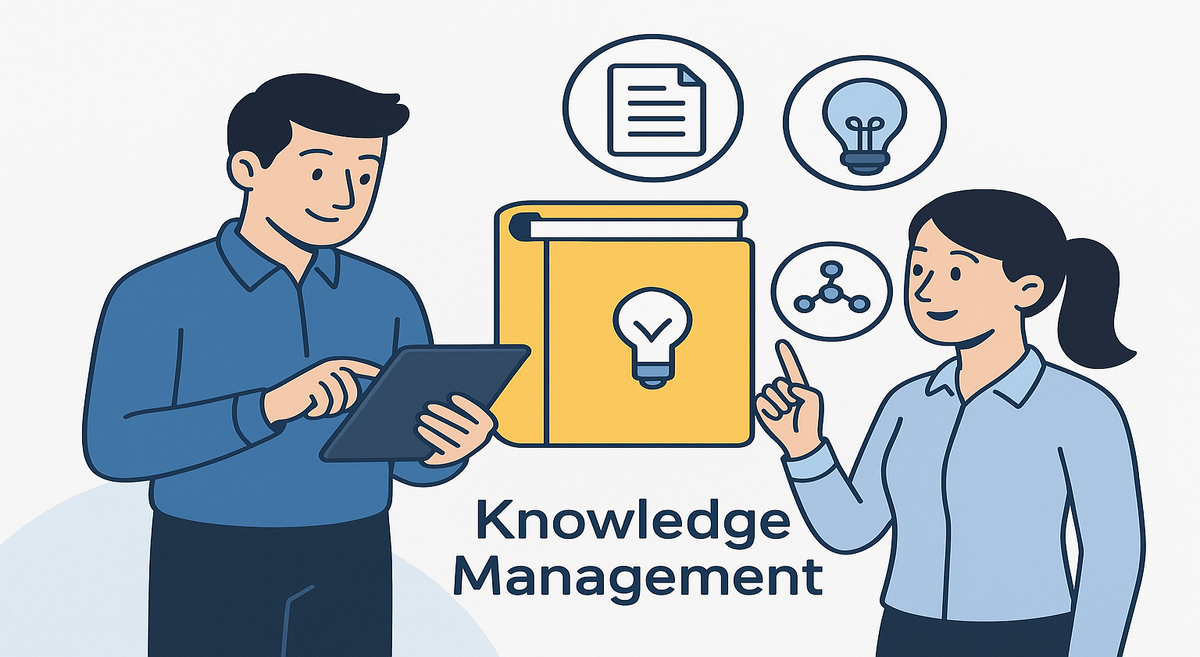
Knowledge Management: Strategic Guide for Organizations

Knowledge management is frequently misunderstood. Organizations often confuse it with information management, document storage, or training programs. 

Within structured human capital frameworks such as HCM 3000 and aligned with ISO 23326, knowledge management is treated as a strategic organizational capability rather than merely a training function.

BPTW Best Place To Work® evaluates how systematically knowledge management practices are embedded into human capital governance.

Knowledge Management vs Information Management

The most common confusion is between knowledge management and information management. While related, they address fundamentally different challenges.

Information management deals with codified knowledge after it’s been documented. Once you write something down in a manual, database, or document, information management handles storage, retrieval, and organization. It’s about managing content that already exists in explicit form.

Knowledge management includes codification but goes much further.

It concerns itself with knowledge that hasn’t been written down yet, the experience and insights that exist only in people’s heads.

It ensures that codified knowledge supports good decisions and effective action, tailored to the user’s context and understanding.

Most organizational knowledge is never fully codified. No matter how many resources you invest in documentation, you cannot capture complete knowledge like:

  • Judgment an experienced engineer applies
  • Intuition a skilled salesperson uses
  • Insights a veteran manager has

Information management alone cannot meet these requirements because it only addresses the portion of knowledge that’s been made explicit.

Why Data Management Isn’t Enough Either

Data management focuses on structured information: databases, datasets, analytics. While algorithms can mine data to provide insights, this represents only one dimension of organizational knowledge.

Business intelligence relates to knowledge management through its goal of creating new insights by analyzing data and identifying patterns. But patterns in data don’t capture the full scope of what organizations know and need to know.

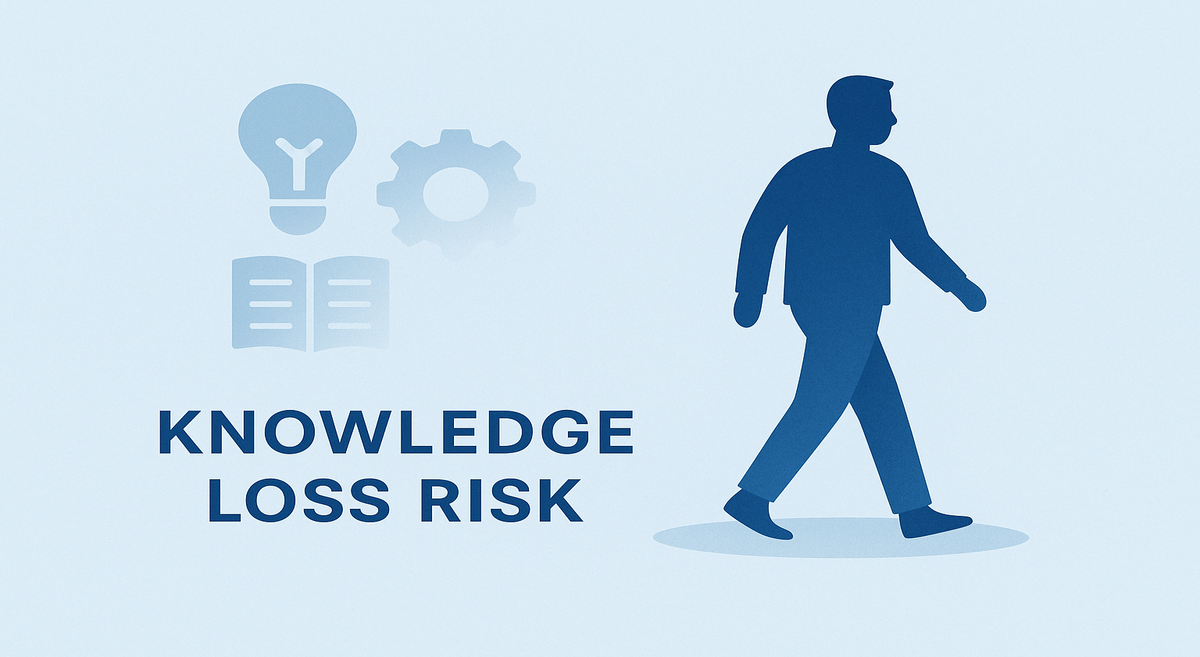
Knowledge Management : Knowledge Loss Risk

The Human Dimension

Knowledge management intersects critically with human resource management. HR covers all aspects of managing people in organizations, including optimizing their contribution and building capacity.

It enables development of individual and collective worker capacity by creating, sharing, and using knowledge. It improves productivity by ensuring people can access and apply what the organization knows.

These disciplines depend on each other. Workers rely on knowledge to perform their duties and increase their employ-ability. Organizations rely on knowledge to deliver objectives and thrive. Shared knowledge is powerful but useless if workers don’t apply it.

Effective management of knowledge reduces the impact of knowledge lost through employee turnover. When experienced people leave, their expertise often walks out with them unless the organization has captured and shared that knowledge systematically.

Learning and Development Connection

Both this discipline and training enable organizations to understand gaps between current and future knowledge needs. Training uses learning programs to bridge gaps at the individual level. Knowledge management facilitates knowledge acquisition in various forms and at multiple levels.

The distinction matters because not all knowledge gaps can be addressed through formal training. Some require mentoring, communities of practice, or structured knowledge sharing that training programs don’t provide.

Organizational learning regards knowledge as a means for learning processes. Knowledge management regards knowledge as a means to achieve organizational objectives, which might include facilitating learning when appropriate.

Innovation and Risk Management

Innovation management involves nurturing creativity, often facilitated by knowledge sharing and development. Innovation also creates new knowledge that feeds back into the organization’s knowledge base.

Risk management and this discipline are closely linked but separate disciplines. Effective practice reduces or manages certain risks, particularly those related to expertise loss or decision-making with incomplete information. However, knowledge management impacts business effectiveness, performance, and reputation beyond just risk reduction through capability enhancement and decision support.

Customer Relationships

Customer relationship management handles data, information, and knowledge related to customers and stakeholders. This approach serves as a means to better customer relationship management by ensuring customer insights are captured, shared, and applied across the organization rather than remaining isolated in individual relationships.

Quality Management Integration

Knowledge management complements quality management. International quality standards recognize organizational knowledge as a mandatory element for quality management systems. This discipline provides a structured approach to meeting those requirements.

Why These Distinctions Matter

Understanding what knowledge management is and isn’t clarifies where it fits in your organization and what problems it can solve.

You cannot solve these challenges with only information management tools. Document repositories don’t capture tacit knowledge. SharePoint alone won’t ensure knowledge flows effectively through your organization.

You cannot replace this practice with training programs. Training addresses individual skill gaps but doesn’t manage the broader organizational knowledge base or facilitate knowledge sharing across teams.

You cannot substitute data analytics for managing organizational knowledge. Analytics provide insights from structured data but don’t address the experience, judgment, and tacit expertise that drive much organizational performance.

The Integration Opportunity

Knowledge management connects with multiple disciplines:

  • Connect HR, L&D, innovation, quality, and risk functions
  • Enable organizational synergy
  • Improve knowledge application and decision-making

This integration creates synergy and improved management systems.

Organizations that explicitly connect this discipline with these various disciplines achieve better outcomes than those treating each function in isolation. It becomes the connective tissue that helps different organizational functions leverage what the organization collectively knows.

What This Means Practically

Effective knowledge management requires recognizing that organizational knowledge exists in multiple forms – some codified, much tacit – and managed through various mechanisms beyond document storage.

It means building systems that capture knowledge where possible, facilitate sharing where capture is difficult, and ensure application where knowledge exists. It means connecting these practices with HR practices, learning programs, innovation processes, and quality systems rather than treating it as a standalone IT project.

Organizations that understand these connections build sustainable knowledge management capabilities. Those that confuse knowledge management with simpler adjacent disciplines invest in solutions that address only part of the challenge.

Within HCM 3000, knowledge management is governed as a strategic workforce capability aligned with ISO 30401.

BPTW Best Place To Work® evaluates how consistently these knowledge management practices are embedded across organizational processes, linking them to performance, innovation, and human capital sustainability.

Images by : Chat GPT


Candidate Experience in Recruitment: An Essential Guide

Candidate experience is how job seekers perceive your organization throughout the recruitment process. It encompasses every interaction from initial awareness of your company through application, assessment, interviews, and offers. This experience shapes whether talented individuals want to work for you and what they tell others about your organization.

Within structured human capital management frameworks such as HCM 3000, candidate experience is treated as a measurable recruitment system outcome rather than a soft perception issue.

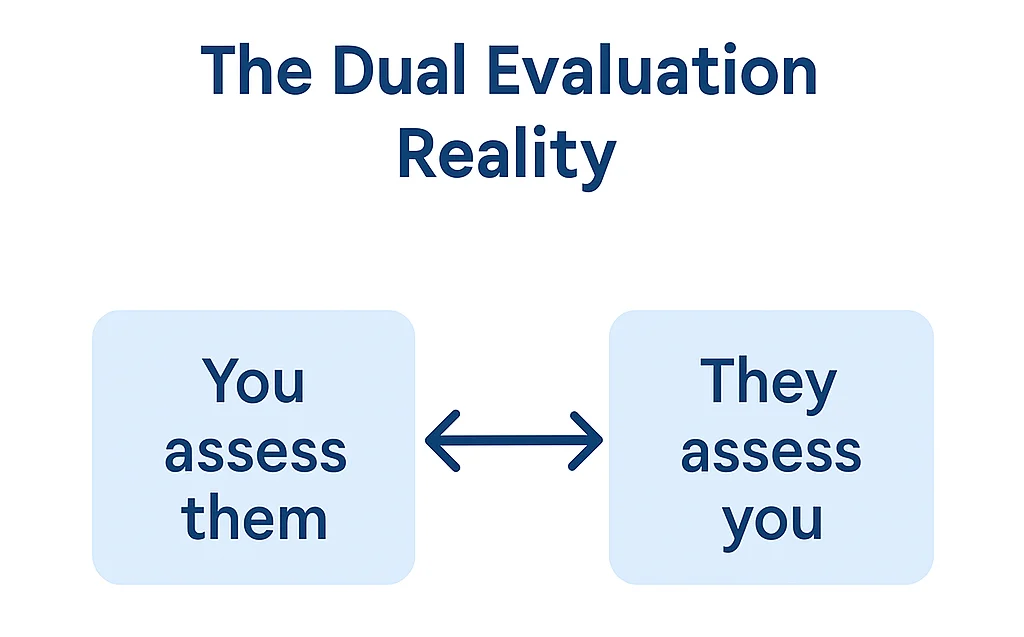
The Dual Evaluation Reality

Recruitment involves parallel assessments. While you evaluate candidates for job fit, they simultaneously evaluate you as a potential employer. Application processes, communication quality, assessment relevance, and interview professionalism all signal what working for your organization might be like.

Organizations that treat recruitment as purely evaluative miss this dynamic. Candidates aren’t passive subjects being screened. They’re making active decisions about whether to continue investing time in your process based on the experience you provide.

Candidate Experience- the dual evaluation

Why It Matters for Talent Acquisition

Poor candidate experiences drive quality applicants away, often after significant investment in sourcing and screening them. In competitive labor markets where demand for skilled talent exceeds supply, candidate experience frequently determines who succeeds in hiring.

ISO 30405 (Human resource management — Recruitment) emphasizes fair, transparent, and consistent recruitment practices, reinforcing candidate experience as a critical determinant of recruitment effectiveness and employer reputation.

The impact extends beyond individual vacancies. Candidates share their experiences through professional networks and platforms. Negative experiences damage your employer brand broadly, making future recruitment harder and more expensive across all roles.

Research indicates that recruitment experience affects post-hire outcomes. How candidates are treated during hiring influences their subsequent job satisfaction, engagement, and performance if employed. The process sets initial expectations and shapes perceptions that persist.

Employer Brand and Attraction

Before formal recruitment begins, your organization already has a reputation in the labor market. This employer brand reflects perceptions based on your business activities, public presence, and what current or former employees share about working there. Whether actively managed or not, this reputation exists and influences who applies to your opportunities.

BPTW Best Place To Work® certification evaluates candidate experience through recruitment consistency, communication quality, and alignment between employer brand promises and actual hiring practices.

Organizations with strong employer brands attract more qualified applicants and fill positions faster. Those with weak or negative reputations struggle to generate interest despite competitive compensation. Digital platforms amplify these reputations, giving candidates unprecedented access to insider perspectives.

Attraction isn’t passive. Organizations that engage potential talent before specific vacancies arise position themselves favorably when those individuals later explore opportunities. This proactive relationship-building creates awareness that converts to applications during active recruitment.

Process Design Impact

Every recruitment touch-point affects candidate perception. Confusing application systems frustrate applicants. Slow communication or no communication signals disrespect. Assessments that seem arbitrary or irrelevant create negative impressions about organizational judgment.

Key recruitment touch-points that shape candidate experience include:

  • Job advertisement clarity
  • Application system usability
  • Timeliness of communication
  • Interview structure and professionalism
  • Transparency of decision-making

Fairness, respect, and relevance are critical throughout. When candidates understand why assessments are used and feel the process treats them equitably, perception remains positive even when they’re not selected. Conversely, opaque or seemingly unfair processes generate resentment that gets shared publicly.

The information exchange during recruitment matters significantly. Candidates continue researching your organization throughout the process. How you respond to questions, the clarity of role descriptions, and the professionalism of interviewers all contribute to their developing understanding of you as an employer.

Dropout Intelligence

Not every candidate who begins your process completes it. Some exit during application, others after initial screening. Understanding why people drop out provides valuable insight into process weaknesses.

Dropouts caused by poor communication, excessive delays, or negative interactions reveal fixable problems. Dropouts due to better opportunities elsewhere or personal circumstances are inevitable but less actionable. Distinguishing between these categories helps focus improvement efforts where they’ll have impact.

Measurement Drives Improvement

Organizations serious about candidate experience measure it systematically. Relevant metrics include applicant volume per vacancy, progression rates through recruitment stages, offer acceptance ratios, and candidates who actually start employment.

Survey feedback from all participants, including those who drop out or decline offers, reveals what’s working and what needs attention. Third-party administration increases honesty by removing concerns about bias or repercussion.

These measurements inform resource allocation decisions. Which recruitment sources produce quality applicants? Where do candidates exit the process most frequently? What aspects of the experience receive consistent criticism? Answers guide targeted improvements rather than guessing at problems.

The Compounding Effect

Candidate experience compounds over time. Organizations that consistently deliver positive experiences build reputations that strengthen with each hiring cycle, making subsequent recruitment easier. Those that neglect experience face increasing difficulty as negative reputations spread and calcify.

Recovery from damaged employer brands requires sustained improvement over extended periods. Prevention through good practice is far more efficient than reputation repair after problems become entrenched.

Market Context

Labor markets increasingly favor candidates, particularly for specialized or high-demand skills. Organizations compete for the same talent pools, differentiating through compensation, opportunity, and how they treat people during recruitment.

In this environment, candidate experience becomes competitive advantage. Organizations that provide professional, respectful engagement throughout recruitment succeed more consistently than those viewing the process as something done to candidates rather than with them.

The shift toward candidate-driven markets means talent acquisition increasingly resembles customer acquisition. Just as poor customer experience drives buyers to competitors, poor candidate experience drives talent elsewhere. Organizations that recognize this parallel adapt recruitment accordingly.

Image by : Chat GPT

Organizations that recognize recruitment as a strategic capability invest in systematic approaches to candidate experience. Learn how BPTW certification provides frameworks for structured recruitment, hiring, and talent management that build your reputation as an employer of choice.

Recruitment Planning Framework: Strategic Hiring Success

Recruitment planning separates organizations that consistently hire great talent from those that struggle with costly mis-hires and prolonged vacancies. Without a structured approach, recruitment becomes reactive, expensive, and misaligned with business needs. Strategic planning transforms hiring into a competitive advantage.

Within structured human capital frameworks such as HCM 3000, recruitment planning is treated as a core workforce capability rather than an administrative task.

Effective recruitment planning connects workforce needs, market realities, and hiring decisions into a single, repeatable process.

Why Recruitment Planning Drives Results

Effective recruitment planning ensures your hiring process meets organizational needs efficiently. It reduces time-to-hire, improves candidate quality, and creates a positive experience that strengthens your employer brand. Most importantly, it ensures every stakeholder knows their role and timeline, eliminating bottlenecks that delay critical hires.

ISO 30405 (Human resource management — Recruitment) reinforces the importance of structured recruitment planning aligned with organizational needs, role requirements, and consistent hiring practices.

Analyzing Your Job Market Context

Understanding Talent Availability

The job market changes constantly. Before launching recruitment, assess talent availability in your sector and location. Consider mobility patterns, emerging skill sets, and competitor activity. This intelligence helps you position opportunities realistically.

Practical research approaches:

  • Review government employment statistics for your industry
  • Consult recruitment agencies familiar with your talent pool
  • Post exploratory job ads to gauge response rates
  • Network with industry peers about hiring conditions

If information is scarce, test the market with a general job posting on popular platforms to understand candidate availability and expectations.

how recruitment planning affects employer brand

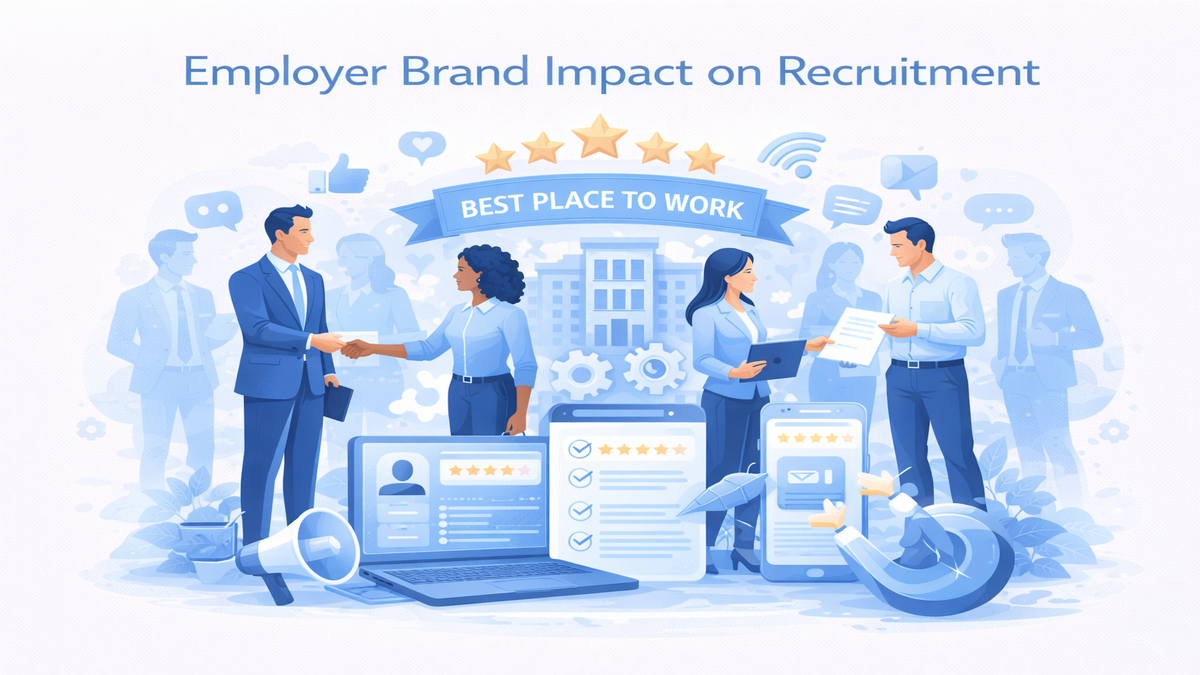
Employer Brand Impact on Recruitment

BPTW Best Place To Work® certification evaluates whether employer brand claims are supported by consistent recruitment practices and candidate experience, not marketing statements.

Your employer brand (how candidates perceive working for your organization) directly affects recruitment outcomes. A positive brand attracts quality candidates and reduces hiring costs. A negative brand makes every hire harder and more expensive.

Consider your current employer brand reputation when designing your recruitment approach. Remember that every interaction during recruitment either strengthens or damages your brand.

Slow responses, unclear communication, or disorganized processes send negative signals to candidates who will share their experiences online and with peers.

Compensation Strategy

Budget constraints are real, but compensation directly impacts recruitment effectiveness. This includes base salary, performance bonuses, benefits packages, and non-monetary perks. Understanding your compensation positioning relative to market rates helps you set realistic expectations and craft compelling offers.

If your compensation is below market, acknowledge this in planning and emphasize other value propositions like growth opportunities, work flexibility, or company culture.

Building Clear Role Definitions

Crafting Effective Job Descriptions

A strong job description serves the entire recruitment process and beyond. It should clearly outline the role’s responsibilities, work environment, performance expectations, and reporting structure. This clarity helps candidates self-select appropriately and provides a foundation for on-boarding and performance reviews.

Include practical details: team structure, key projects, success metrics for the first 90 days, and growth trajectory. Avoid generic corporate language that tells candidates nothing meaningful about the actual work.

Developing Person Specifications

Person specifications define the essential criteria for candidate selection. This includes minimum education levels, required experience, technical competencies, and behavioral characteristics necessary for success.

Critical consideration: Ensure specifications reflect genuine job requirements, not personal biases or discriminatory preferences. Question whether each criterion is truly essential or merely “nice to have.” Over-specifying requirements unnecessarily narrows your talent pool.

Base specifications on structured requirements analysis rather than assumptions about ideal candidates. What does someone actually need to succeed in this role within your specific organizational context?

Coordinating Stakeholders Effectively

Identifying Key Players

Successful recruitment requires coordinated involvement from multiple stakeholders. Identify everyone who needs to participate: hiring managers, team members, HR professionals, senior leadership, and potentially external partners.

Define each stakeholder’s role clearly: Who screens applications? Who conducts interviews? Who makes the final decision? Who handles offer negotiations? Ambiguity here creates delays and confusion.

Managing Stakeholder Engagement

Secure stakeholder commitment early. Ensure everyone understands their responsibilities and timeline commitments. One unavailable interviewer can derail an entire recruitment process and lose strong candidates to competing offers.

Scheduling for Success

Creating Realistic Timelines

Map out your recruitment timeline with specific milestones: when job postings go live, application deadlines, screening completion dates, interview periods, decision points, and offer delivery.

Key scheduling elements:

  • Advertisement placement timing and duration
  • Application review periods
  • Assessment and interview dates
  • Candidate communication touch-points
  • Decision-making deadlines
  • Offer presentation and negotiation windows

Build buffer time for delays. Candidates have notice periods, stakeholders get sick, and decisions take longer than planned. Aggressive timelines create stress and poor decisions.

Maintaining Candidate Momentum

Long gaps between recruitment stages lose candidates to other opportunities. Schedule efficiently to maintain engagement. If delays occur, communicate proactively. Silence kills candidate interest faster than anything else.

Making recruitment planning work

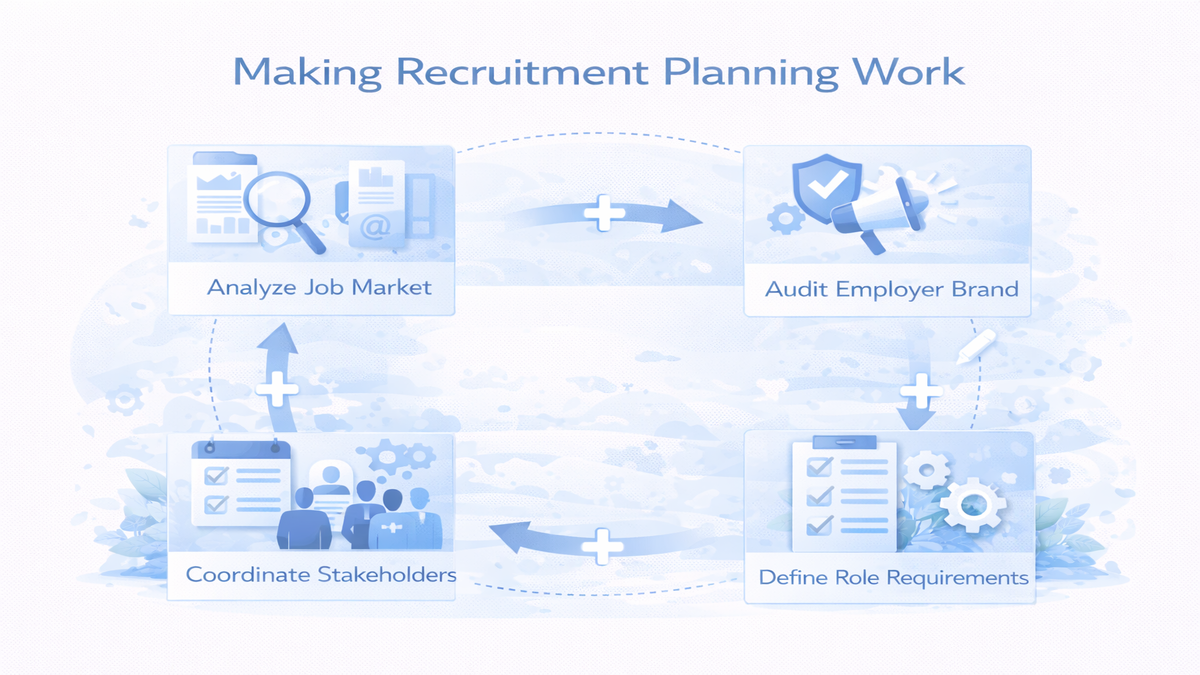
Making Recruitment Planning Work

Strategic recruitment planning isn’t bureaucracy. It’s the difference between hiring the right people efficiently and struggling with costly recruitment failures. Organizations that plan intentionally create better candidate experiences, make smarter hiring decisions, and build stronger teams.

Key takeaways for immediate implementation:

  • Research your job market before designing your approach
  • Audit your employer brand and address reputation issues
  • Create specific, unbiased role requirements
  • Secure stakeholder commitment with clear timelines
  • Schedule realistically with buffer time built in

Structured recruitment planning creates accountability, consistency, and measurable results. It transforms hiring from a necessary hassle into a strategic capability that drives organizational performance.

Workforce Planning: Why It Matters for Business Success

Understanding workforce planning has become critical for organizational success. Workforce planning identifies your current workforce capabilities, projects future needs, and calculates the gap between them. This discipline ensures organizations have the right people with the right skills when they’re needed.

Within structured human capital frameworks such as HCM 3000, this process is governed as a strategic management discipline rather than a reactive HR activity.

International guidance such as ISO 30409 (Human resource management — Workforce planning) reinforces the need to systematically link workforce capability planning with organizational strategy and risk management.

Two dimensions of workforce planning

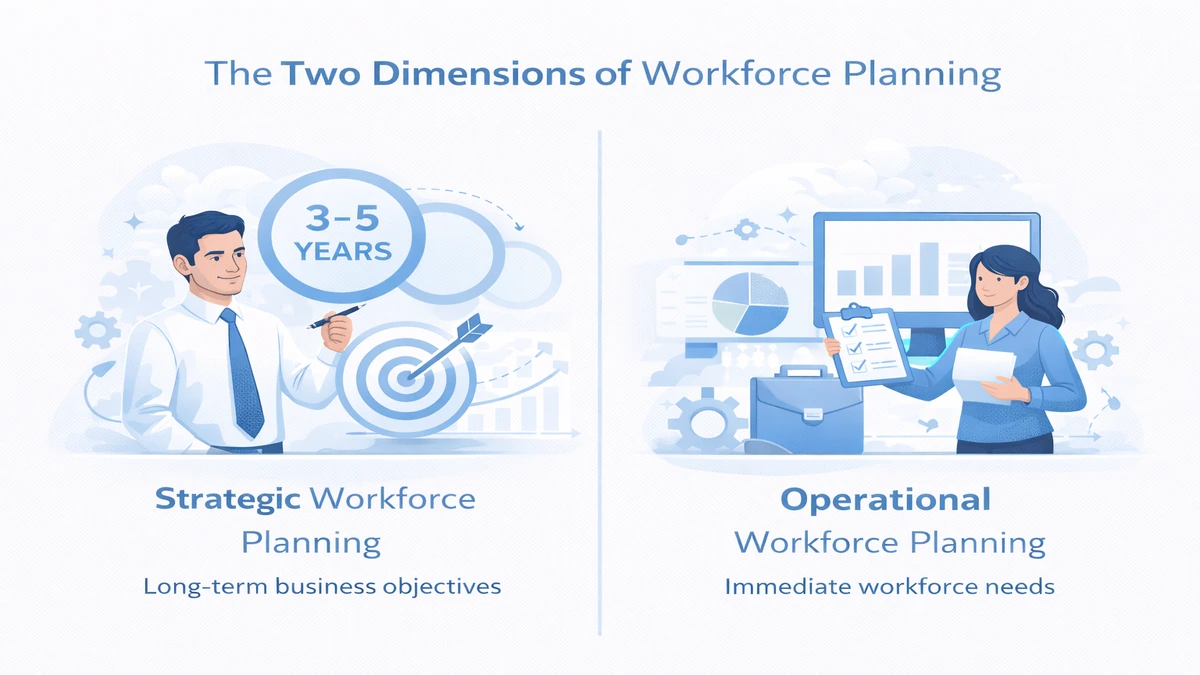
The Two Dimensions of Workforce Planning

Workforce planning operates at two distinct levels, each serving different organizational needs.

Strategic workforce planning looks three to five years ahead. It aligns talent requirements with long-term business objectives, anticipating how growth, technological advancement, and market evolution will reshape workforce needs. This includes succession planning for critical roles and leadership development programs.

Operational workforce planning addresses immediate requirements. It monitors workforce metrics such as turnover rates, productivity levels, and employee satisfaction. Adjustments happen based on operational demands, seasonal fluctuations, and current business conditions.

Both dimensions are necessary. Strategic planning without operational execution remains theoretical. Operational focus without strategic direction becomes reactive firefighting.

Why This Capability Can’t Be Ignored

The global business environment is increasingly complex and interconnected. Markets shift rapidly. Technology evolves continuously. Workforce demographics are transforming. Organizations need planning to navigate this complexity effectively.

The value of structured capability planning becomes clear when organizations face these dynamic challenges. Without structured workforce planning, businesses struggle to adapt quickly enough to remain competitive.

Planning connects human resource strategy to business strategy and financial plans. When your organization pursues new markets, adopts new technologies, or shifts strategic direction, workforce planning identifies the talent implications early. This visibility enables proactive responses through hiring, training, internal mobility, or restructuring.

The Business Case for Planning

Organizations without a structured planning framework encounter consistent problems. Critical positions remain vacant because succession plans don’t exist. Skill gaps surface unexpectedly when new initiatives launch. Training investments lack strategic direction. Hiring happens reactively under pressure, which increases costs and reduces quality.

These issues impact financial performance and operational effectiveness. Vacancies reduce productivity. Poor talent utilization wastes compensation investment. High turnover from inadequate development opportunities creates constant replacement costs.

Planning Through Organizational Change

This planning discipline becomes particularly valuable during significant organizational transitions. Growth requires different capabilities than maintenance. Restructuring demands a clear understanding of required versus available skills. Mergers and acquisitions involve integrating workforce with different profiles. Di-vestments require determining which capabilities to retain.

Planning helps organizations understand the workforce implications of business decisions before commitments are made, not after problems emerge.

what makes workforce planning

What Makes This Planning Effective

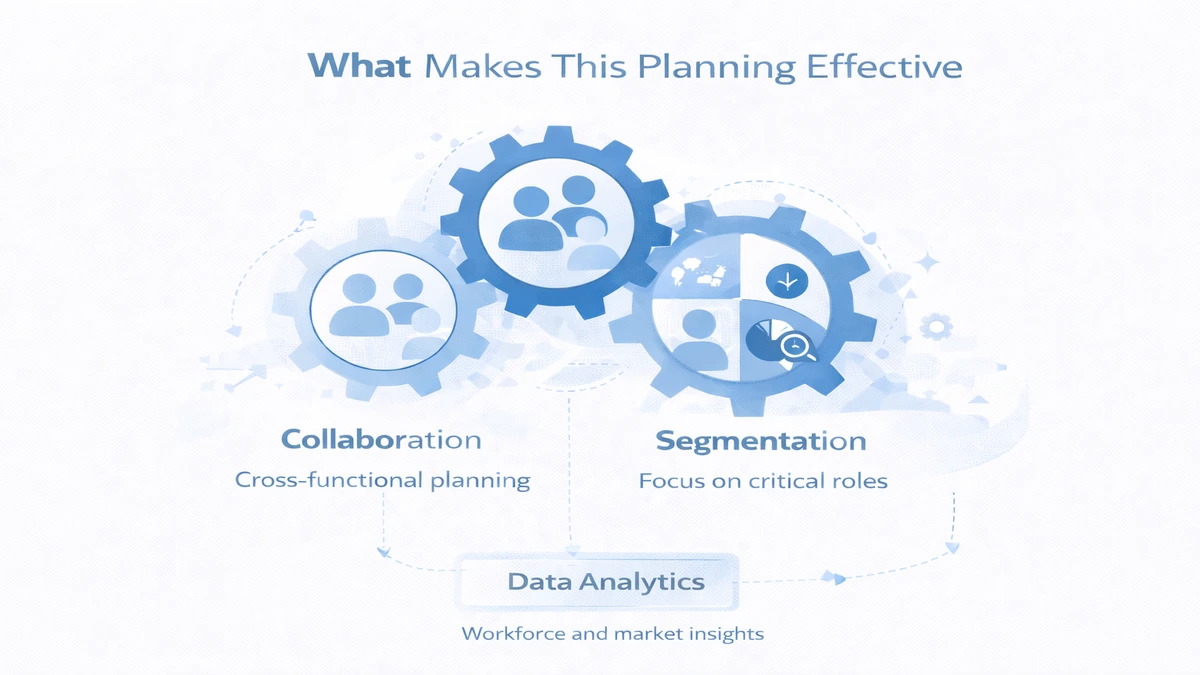
Effective planning requires collaboration across functions. HR brings workforce data and people expertise. Business leaders provide strategic direction. Finance contributes budget parameters. Department heads understand operational requirements.

This collaboration ensures plans reflect actual business needs rather than isolated functional perspectives.

Planning also depends on quality data. Workforce analytics reveal patterns in turnover, performance, and skill distribution. Skill inventories identify current capabilities. Market intelligence shows external talent availability. These inputs produce realistic projections about future needs and how to address them.

Segmentation improves planning effectiveness. Strategic roles that directly drive business success warrant more intensive planning focus than support functions. Understanding which roles are critical, which skills transfer across positions, and where talent bottlenecks exist enables smarter resource allocation.

Within HCM 3000, workforce planning requires organizations to identify critical roles, future capability needs, and workforce risks as part of structured human capital governance.

This aligns directly with ISO 30409, which emphasizes scenario-based workforce planning, role criticality assessment, and capability gap analysis rather than simple headcount forecasting.

Building Organizational Capability

This capability transforms how organizations approach their most significant asset. Instead of reacting to immediate staffing pressures, planning enables deliberate capability building aligned with business direction.

Organizations with mature planning adapt more effectively to changing conditions. They’ve considered potential scenarios, understood workforce implications, and prepared response options. When market conditions shift or strategic priorities change, execution happens more smoothly because the workforce side supports rather than constrains performance.

This capability becomes increasingly valuable as business environments grow more dynamic and competitive pressures intensify.

Workforce Planning: The Foundation for Resilience

This approach creates organizational resilience by making workforce requirements explicit and actionable. It reduces vulnerability to key person dependencies, skill shortages, and demographic shifts.

Planning also improves decision quality. When workforce implications are visible during strategy development, leaders make more informed choices about timing, resource allocation, and risk management.

The result is an organization better positioned to execute its strategy with confidence that workforce capability will support business objectives.

BPTW Best Place To Work® certification evaluates how consistently organizations apply workforce planning as part of structured human capital governance, not as an isolated HR exercise.

Assessment focuses on whether workforce planning outputs inform leadership decisions, capability investment, succession planning, and long-term organizational sustainability rather than remaining theoretical documents.

Image source: Illustrative visual for workforce planning concepts

Personal Learning Plan: A Practical Guide

A personal learning plan transforms workplace learning from haphazard to strategic. Instead of random courses and forgotten training, it creates focused development that improves performance and capability.

A personal learning plan works best when treated as a shared responsibility between individuals and managers.

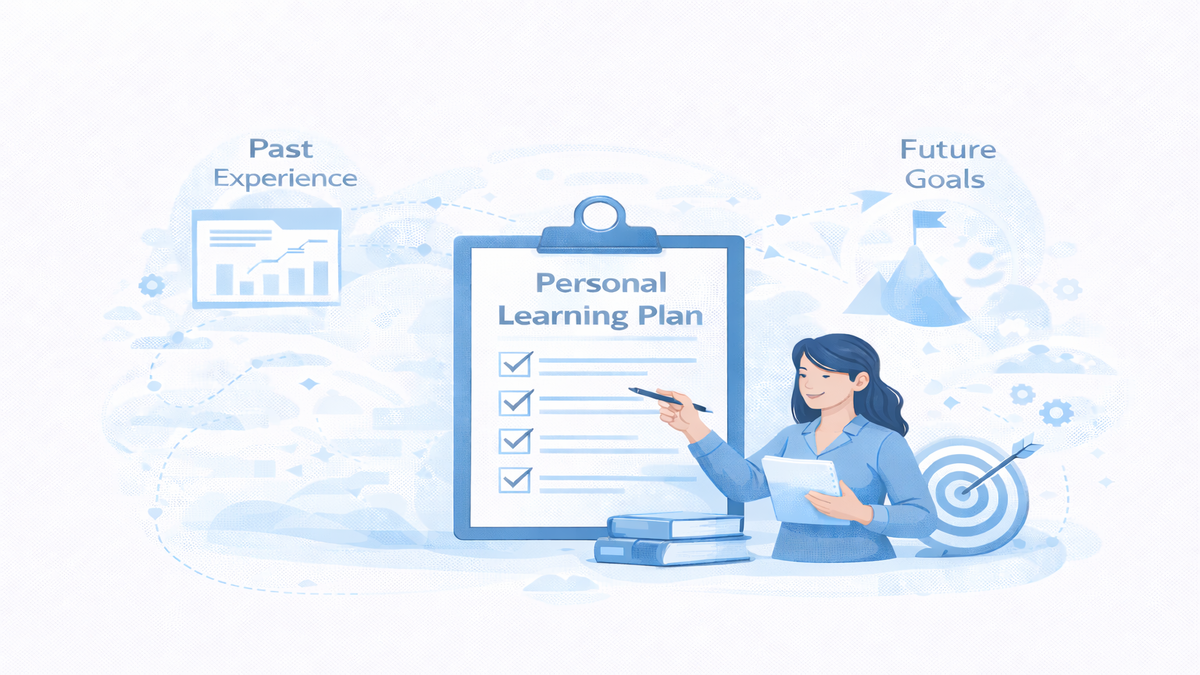
It connects past experience, current role requirements, and future aspirations into a structured development path that benefits both employees and organizations.

Within structured human capital frameworks including HCM 3000, personal learning plans are treated as formal capability development mechanisms rather than informal learning records.

When You Need a Personal Learning Plan

These triggers signal when a personal learning plan becomes essential rather than optional.

People need focused learning when they’re:

  • Learning something for the first time in a new role or responsibility.
  • Expanding the depth of existing knowledge or skills to perform at higher levels.
  • Working toward a specific outcome or objective that requires new capabilities.
  • Encountering problems where current approaches aren’t working.
  • Changing how they work, which requires new skills and different practices.
  • These triggers signal when a personal learning plan becomes essential rather than optional.

Understanding Learning Preferences

ISO 30422 (Human resource management — Learning and development) emphasizes planned, outcome-based learning aligned with organizational and role requirements rather than ad-hoc skill acquisition.

People learn differently. Some prefer hands-on practice. Others learn through reading or watching. Some need structured instruction while others thrive with self-directed exploration.

Not everyone recognizes their own learning preferences. Organizations should help individuals become aware of approaches that work best for them and encourage developing their own learning skills.

Effective learning activities respect individual preferences and, where possible, accommodate specific needs rather than forcing everyone through identical processes.

Analyzing Personal Learning Needs

Creating a useful personal learning plan starts with systematic analysis involving both the learner and their manager. Consider both individual context and organizational needs alongside current capability.

Four key questions guide this analysis:

  1. What learning is needed and why? Be specific about the capability gap and why it matters.
  2. How can the learning be undertaken? Identify the most effective methods given the learning goal.
  3. What is the cost? Consider time, money, and opportunity costs of different learning approaches.
  4. What is the impact? How will this learning benefit the individual and organization?

Four steps make this analysis practical:

  1. Clarify learning goals. What does the learner need to understand or be able to do?
  2. Identify current capability level. Use performance evaluations, self-assessments, manager discussions, and stakeholder feedback to establish the starting point.
  3. Prioritize learning needs. Determine urgency, timescales, and relative importance when multiple needs exist.
  4. Decide the best approach. Match learning methods to goals, considering resources and constraints.

Building the Personal Learning Plan

Building the Learning Plan

BPTW Best Place To Work® evaluations examine whether personal learning plans are actively used to build capability, support performance improvement, and sustain long-term workforce effectiveness.

A personal learning plan links past, present, and future learning. There’s no single correct format, but effective plans address three time-frames:

Reflecting on Past Experience

What am I good at? Identify existing strengths to build on.

What could I improve? Recognize areas needing development without judgment.

Present Learning Needs

What knowledge, skills, and behaviors do I require? Be specific about capability needs.

What learning targets or outcomes are appropriate? Set clear, measurable goals.

What timescale is necessary? Establish realistic deadlines for achieving targets.

What learning methods are most appropriate? Choose approaches that match learning goals and personal preferences.

What resources can enhance my ability to achieve these targets? Identify time, budget, expert advice, or other support needed.

What evidence demonstrates achievement? Define how success will be measured and verified.

Evaluation and Future Direction

What elements of the learning process were most successful and why? Understand what worked to repeat it.

What further learning is needed to consolidate achievements? Identify next steps to deepen or apply learning.

Are further learning targets now appropriate? Determine if new goals should be set based on progress.

How can I share what I’ve learned with others? Consider ways to multiply the value of learning through knowledge sharing.

What have I learned about how I learn best? Build self-awareness about personal learning preferences for future development.

Enabling Effective Learning

Learning capacity should be recognized as part of every work role. This requires conscious effort to allocate time, resources, and support.

The way roles are designed directly affects whether they stimulate learning. Jobs should include appropriate demands that challenge people to grow rather than stagnate.

Learning activities should happen at the point of need or as close in time to application as possible. The longer the gap between learning and use, the less effective the learning becomes.

Recognition of significant learning achievements encourages further development, whether through on-the-job learning or formal qualifications.

Technology enables self-paced and self-directed learning through digital resources, videos, online courses, and discussions accessible anytime to suit individual circumstances.

Personal Learning Plan Outcomes

Personal Learning Plan Outcomes

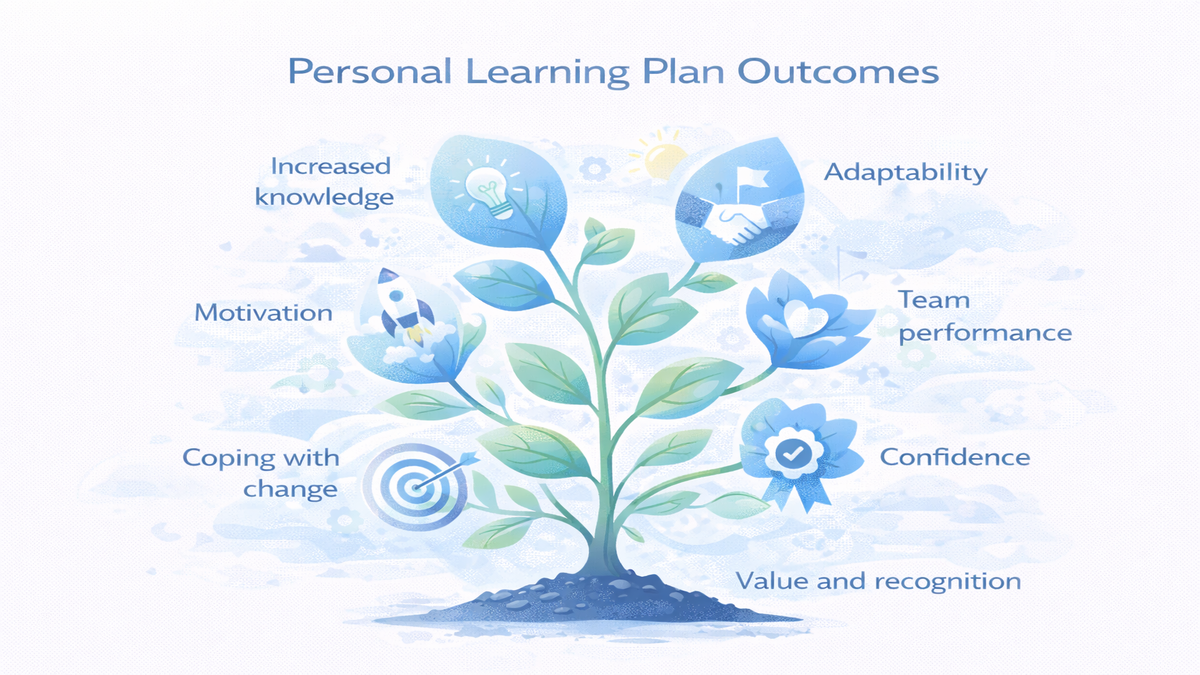
Effective personal learning plans lead to beneficial outcomes:

  • Increased knowledge, confidence, and capability in current roles with ideas to improve performance further.
  • Positive effects on self-esteem and behaviors, preparing people to work independently when required.
  • Greater ability to cope with change and ambiguity in the workplace.
  • Increased motivation to tackle new challenges and innovate.
  • Enhanced team performance through knowledge sharing and greater flexibility.
  • Confirmation that the organization values people and their contributions.

Making It Work

Personal learning plans fail when they become bureaucratic paperwork exercises. They succeed when treated as living documents that guide real development conversations between employees and managers.

  • Review plans regularly, not just at annual performance reviews. Quarterly check-ins allow course corrections and recognition of progress.
  • Connect learning to actual work challenges. The best learning solves real problems or enables new contributions rather than checking boxes on generic competency lists.
  • Celebrate learning achievements. When people complete significant development, acknowledge it publicly to encourage continued growth.

Personal learning plans transform learning from random occurrence into strategic advantage for individuals and organizations alike.

Image by: ChatGPT

Learning Methods: How to Choose the Right Approach

Organizations have access to numerous learning methods: classroom training, coaching, mentoring, e-learning, on-the-job learning, and more. The challenge isn’t finding options. It’s choosing what actually works for your situation.

No learning method is universally superior. A method that’s perfect for onboarding new hires might be terrible for leadership development. Effectiveness depends entirely on matching the method to your context, learners, and what you’re trying to teach.

Why This Matters

Wrong method choices waste money and fail to build capability. Putting people in a classroom to learn a skill they need to practice hands-on frustrates everyone and produces minimal results. Using expensive one-on-one coaching to share information that could reach hundreds through a single online course is inefficient. Requiring in-person attendance when people could learn effectively online reduces participation unnecessarily.

Method selection also determines whether people actually complete learning. Programs that fit their schedules and circumstances get used. Those that don’t get ignored, regardless of content quality.

Types of Learning Method

The Common Learning Methods for Organizations

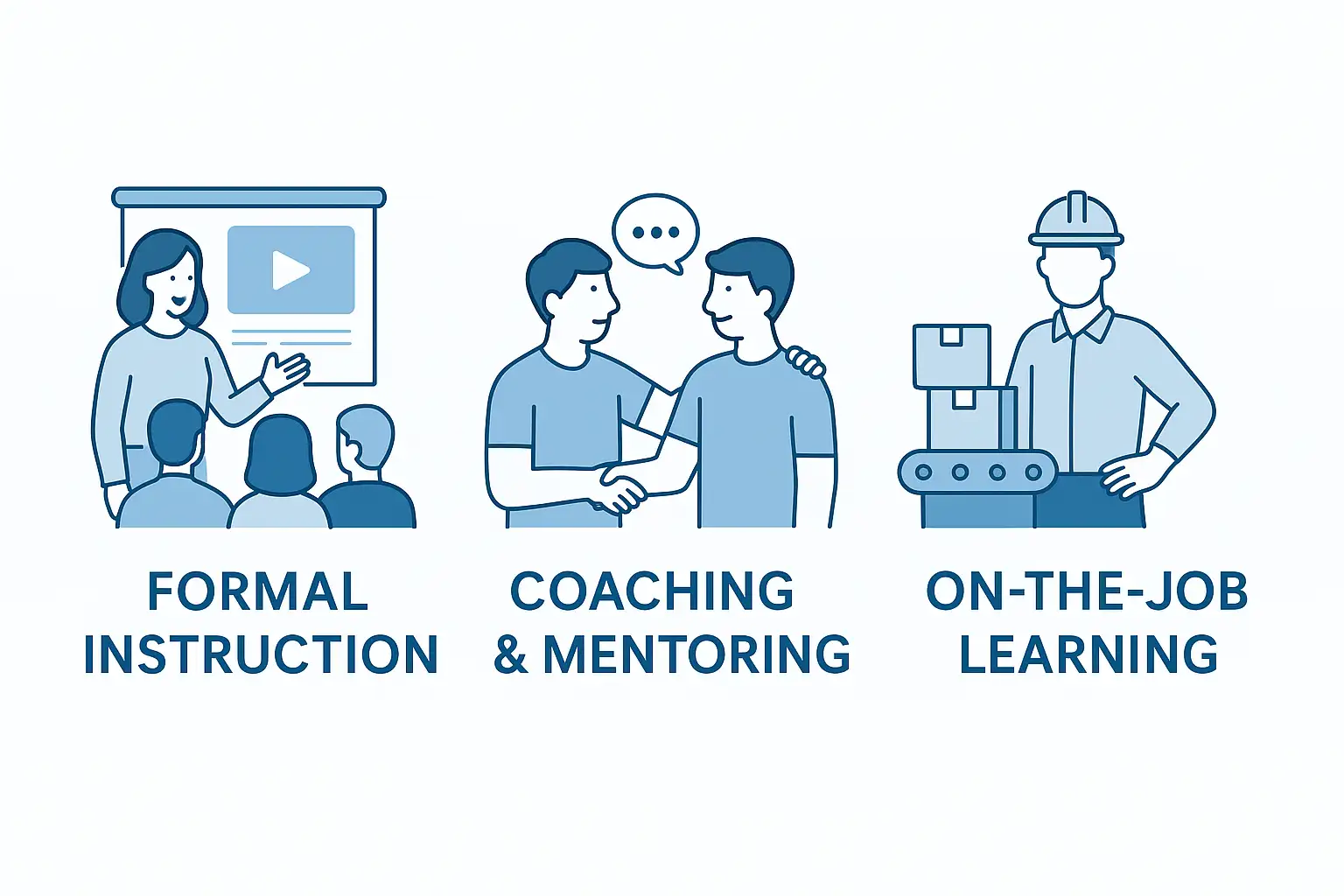
Formal instruction brings groups together for structured learning, either in person or online. Use this when you need to share important information with many people simultaneously or meet compliance requirements.

Coaching involves guided conversations where individuals identify their own solutions to work challenges. It works for people taking on new responsibilities or addressing specific performance issues.

Mentoring pairs less experienced people with seasoned professionals who provide career advice and guidance. It’s valuable for career development and helping underrepresented individuals build networks and skills.

On-the-job learning happens during regular work through intentional practice, often alongside experienced colleagues. This is how most technical and practical skills are actually acquired.

Team and network learning occurs through professional networks, communities of practice, and interactions with colleagues, customers, and suppliers. It’s useful when important knowledge is held by people rather than written in manuals.

E-learning uses technology for training delivery, offering flexibility in timing and location. It ranges from structured online courses to video conferencing and collaboration tools.

Reflective learning encourages people to analyze their experiences and identify what they learned and what they need to improve.

Leader role modeling happens when people observe and imitate effective behaviors demonstrated by managers and leaders.

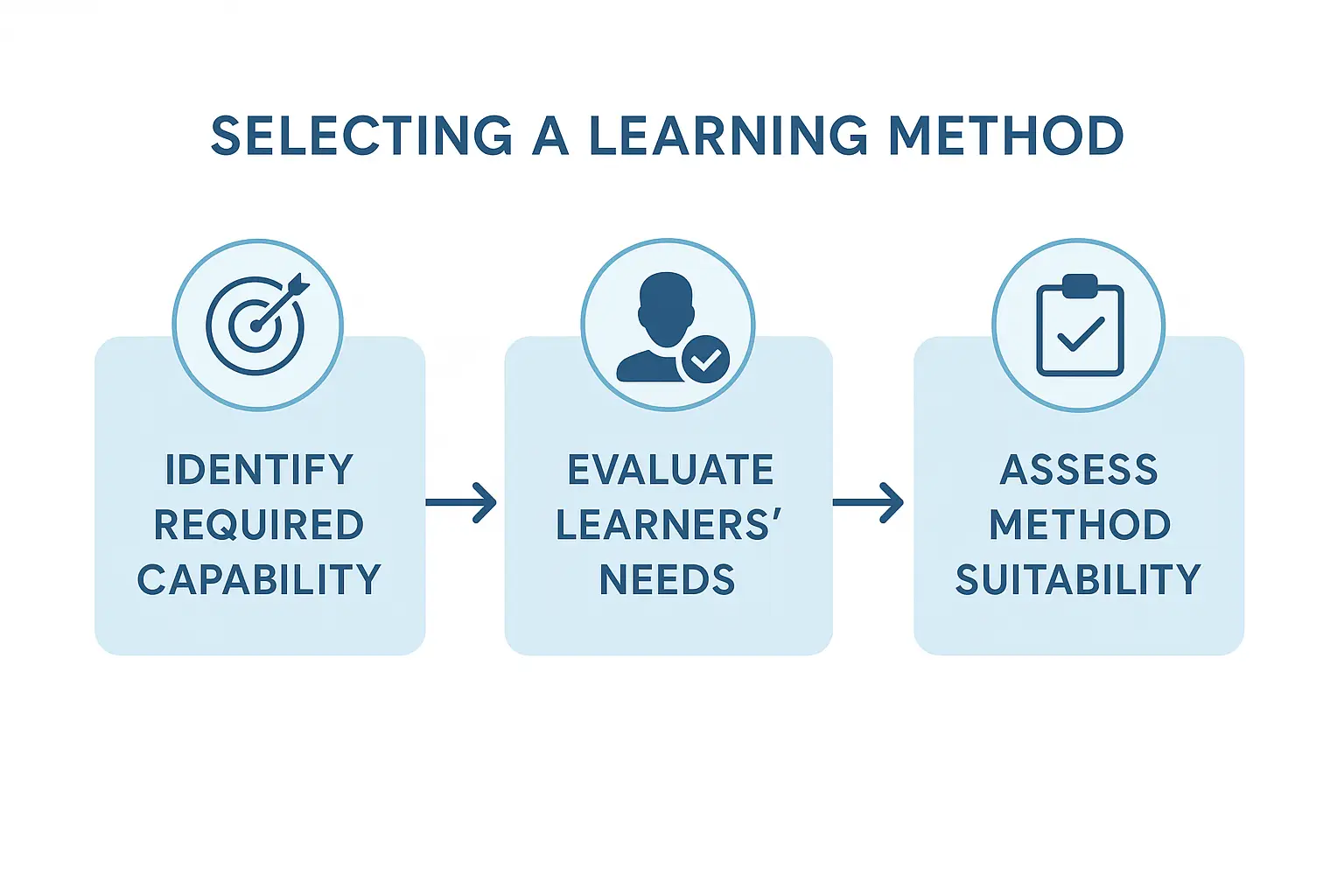
How to Select the Right Learning Methods

The learners themselves. Educational background, job role, experience level, language, and culture affect what methods work. New employees need different approaches than veterans. Technical specialists learn differently than salespeople.

What you’re teaching. Compliance training suits formal instruction or e-learning that reaches many people consistently. Leadership development needs coaching and mentoring. Technical skills require hands-on practice in real contexts.

Your organizational constraints. Budget, time, geographic spread, and existing technology determine what’s feasible. Small organizations with limited budgets rely more on on-the-job learning. Large, dispersed companies invest in e-learning platforms.

Your workplace environment. Can people step away for training? Is there psychological safety to make mistakes while learning? These realities affect which methods will actually work.

Why Blended Learning Methods Work Better

Combining different approaches, called blended learning, addresses the reality that people learn complex capabilities through multiple experiences, not single events.

A leadership program might include online modules for frameworks, group workshops for discussion, individual coaching for application, and peer learning groups for ongoing support. Each method serves a different purpose, and together they create more complete development than any single approach could.

Technology enables more blending options. Online learning reaches distributed teams. Collaboration tools support peer learning across locations. Virtual platforms enable remote mentoring and coaching.

Making Smart Choices

Start with what capability you need to build. Knowledge requires different methods than skill development or behavior change.

Consider who’s learning. What are their starting points, constraints, and how they learn best?

Be honest about resources. What budget, time, technology, and internal expertise do you actually have?

Evaluate fit for purpose. Just because e-learning is cheaper doesn’t mean it’s appropriate for what you’re teaching. Just because classroom training is familiar doesn’t mean it’s effective.

When using technology, ensure it genuinely serves learning rather than creating barriers. Platforms should be accessible and user-friendly, not frustrating obstacles.

How to select right learning method

Common Selection Mistakes

Choosing learning methods before defining learning objectives forces content into inappropriate formats. Starting with “we’ll do a workshop” then figuring out what to teach rarely produces good results.

Defaulting to familiar methods regardless of fit limits effectiveness. If you only know how to deliver classroom training, you’ll use it for everything, even when other methods would work better.

Ignoring learner constraints causes low participation. Requiring in-person attendance from people with inflexible schedules or requiring self-paced discipline from people who need structure sets up failure.

Assuming technology always works better or is always cheaper often backfires. Some learning genuinely benefits from face-to-face interaction or hands-on practice.

Building Method Selection Capability

Organizations develop this capability by expanding beyond default approaches. If you’ve always used classroom training, experiment with coaching or peer learning. If you’ve relied on e-learning, consider when in-person interaction would produce better outcomes.

Monitor results honestly. If completion rates are low, skills aren’t transferring to work, or feedback is consistently negative, the method likely doesn’t fit, regardless of how well-designed the content is.

Learn from what works. When a particular method produces strong results for certain types of learning, understand why and apply those insights elsewhere.

The Bottom Line

Method selection determines whether development investments build needed capability or just consume budget while producing minimal results. Organizations that choose thoughtfully based on actual context and needs develop their people more effectively than those defaulting to familiar approaches or following trends.

Image By : Chat GPT

Want to build systematic learning and development into your human capital management? Learn how BPTW certification helps organizations create structured approaches to employee development.

Upcoming Webinar : Learn About BPTW – Best Place to Work

Join our upcoming webinar to learn how BPTW certification can help your organization build structured people systems that drive business success.

Date:

10th september 2025

Time:

4.00 PM - 4.30PM IST