Recruitment planning separates organizations that consistently hire great talent from those that struggle with costly mis-hires and prolonged vacancies. Without a structured approach, recruitment becomes reactive, expensive, and misaligned with business needs. Strategic planning transforms hiring into a competitive advantage.
Within structured human capital frameworks such as HCM 3000, recruitment planning is treated as a core workforce capability rather than an administrative task.
Effective recruitment planning connects workforce needs, market realities, and hiring decisions into a single, repeatable process.
Why Recruitment Planning Drives Results
Effective recruitment planning ensures your hiring process meets organizational needs efficiently. It reduces time-to-hire, improves candidate quality, and creates a positive experience that strengthens your employer brand. Most importantly, it ensures every stakeholder knows their role and timeline, eliminating bottlenecks that delay critical hires.
ISO 30405 (Human resource management — Recruitment) reinforces the importance of structured recruitment planning aligned with organizational needs, role requirements, and consistent hiring practices.
Analyzing Your Job Market Context
Understanding Talent Availability
The job market changes constantly. Before launching recruitment, assess talent availability in your sector and location. Consider mobility patterns, emerging skill sets, and competitor activity. This intelligence helps you position opportunities realistically.
Practical research approaches:
- Review government employment statistics for your industry
- Consult recruitment agencies familiar with your talent pool
- Post exploratory job ads to gauge response rates
- Network with industry peers about hiring conditions
If information is scarce, test the market with a general job posting on popular platforms to understand candidate availability and expectations.

Employer Brand Impact on Recruitment
BPTW Best Place To Work® certification evaluates whether employer brand claims are supported by consistent recruitment practices and candidate experience, not marketing statements.
Your employer brand (how candidates perceive working for your organization) directly affects recruitment outcomes. A positive brand attracts quality candidates and reduces hiring costs. A negative brand makes every hire harder and more expensive.
Consider your current employer brand reputation when designing your recruitment approach. Remember that every interaction during recruitment either strengthens or damages your brand.
Slow responses, unclear communication, or disorganized processes send negative signals to candidates who will share their experiences online and with peers.
Compensation Strategy
Budget constraints are real, but compensation directly impacts recruitment effectiveness. This includes base salary, performance bonuses, benefits packages, and non-monetary perks. Understanding your compensation positioning relative to market rates helps you set realistic expectations and craft compelling offers.
If your compensation is below market, acknowledge this in planning and emphasize other value propositions like growth opportunities, work flexibility, or company culture.
Building Clear Role Definitions
Crafting Effective Job Descriptions
A strong job description serves the entire recruitment process and beyond. It should clearly outline the role’s responsibilities, work environment, performance expectations, and reporting structure. This clarity helps candidates self-select appropriately and provides a foundation for on-boarding and performance reviews.
Include practical details: team structure, key projects, success metrics for the first 90 days, and growth trajectory. Avoid generic corporate language that tells candidates nothing meaningful about the actual work.
Developing Person Specifications
Person specifications define the essential criteria for candidate selection. This includes minimum education levels, required experience, technical competencies, and behavioral characteristics necessary for success.
Critical consideration: Ensure specifications reflect genuine job requirements, not personal biases or discriminatory preferences. Question whether each criterion is truly essential or merely “nice to have.” Over-specifying requirements unnecessarily narrows your talent pool.
Base specifications on structured requirements analysis rather than assumptions about ideal candidates. What does someone actually need to succeed in this role within your specific organizational context?
Coordinating Stakeholders Effectively
Identifying Key Players
Successful recruitment requires coordinated involvement from multiple stakeholders. Identify everyone who needs to participate: hiring managers, team members, HR professionals, senior leadership, and potentially external partners.
Define each stakeholder’s role clearly: Who screens applications? Who conducts interviews? Who makes the final decision? Who handles offer negotiations? Ambiguity here creates delays and confusion.
Managing Stakeholder Engagement
Secure stakeholder commitment early. Ensure everyone understands their responsibilities and timeline commitments. One unavailable interviewer can derail an entire recruitment process and lose strong candidates to competing offers.
Scheduling for Success
Creating Realistic Timelines
Map out your recruitment timeline with specific milestones: when job postings go live, application deadlines, screening completion dates, interview periods, decision points, and offer delivery.
Key scheduling elements:
- Advertisement placement timing and duration
- Application review periods
- Assessment and interview dates
- Candidate communication touch-points
- Decision-making deadlines
- Offer presentation and negotiation windows
Build buffer time for delays. Candidates have notice periods, stakeholders get sick, and decisions take longer than planned. Aggressive timelines create stress and poor decisions.
Maintaining Candidate Momentum
Long gaps between recruitment stages lose candidates to other opportunities. Schedule efficiently to maintain engagement. If delays occur, communicate proactively. Silence kills candidate interest faster than anything else.
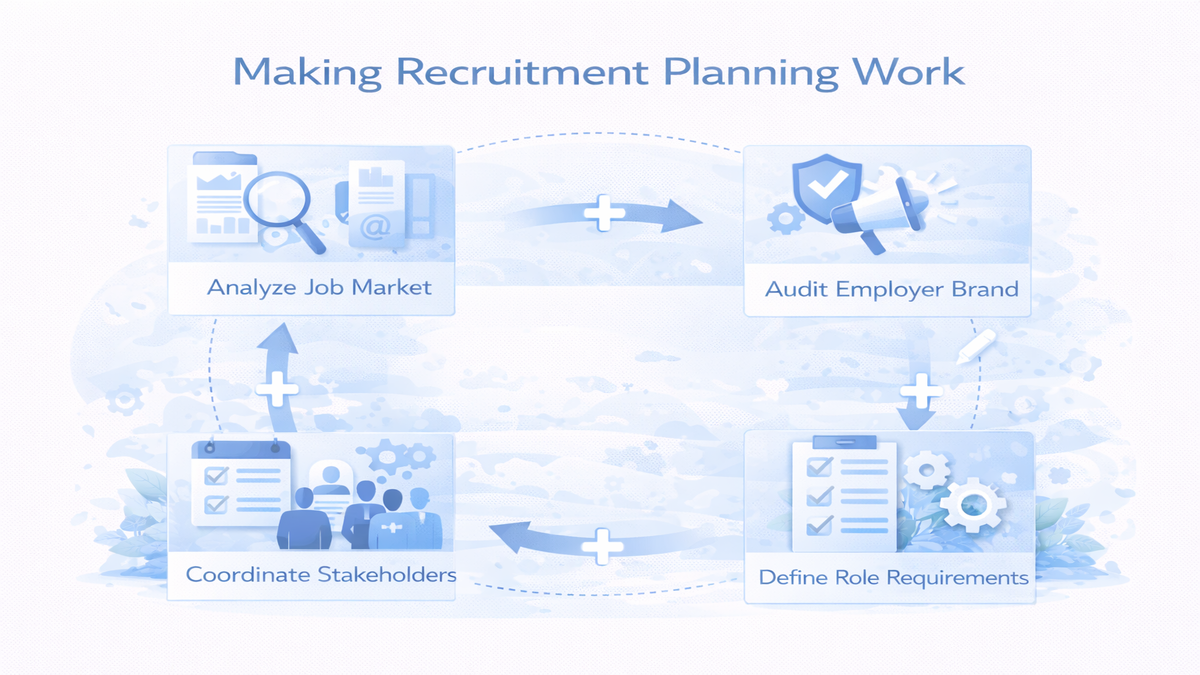
Making Recruitment Planning Work
Strategic recruitment planning isn’t bureaucracy. It’s the difference between hiring the right people efficiently and struggling with costly recruitment failures. Organizations that plan intentionally create better candidate experiences, make smarter hiring decisions, and build stronger teams.
Key takeaways for immediate implementation:
- Research your job market before designing your approach
- Audit your employer brand and address reputation issues
- Create specific, unbiased role requirements
- Secure stakeholder commitment with clear timelines
- Schedule realistically with buffer time built in
Structured recruitment planning creates accountability, consistency, and measurable results. It transforms hiring from a necessary hassle into a strategic capability that drives organizational performance.