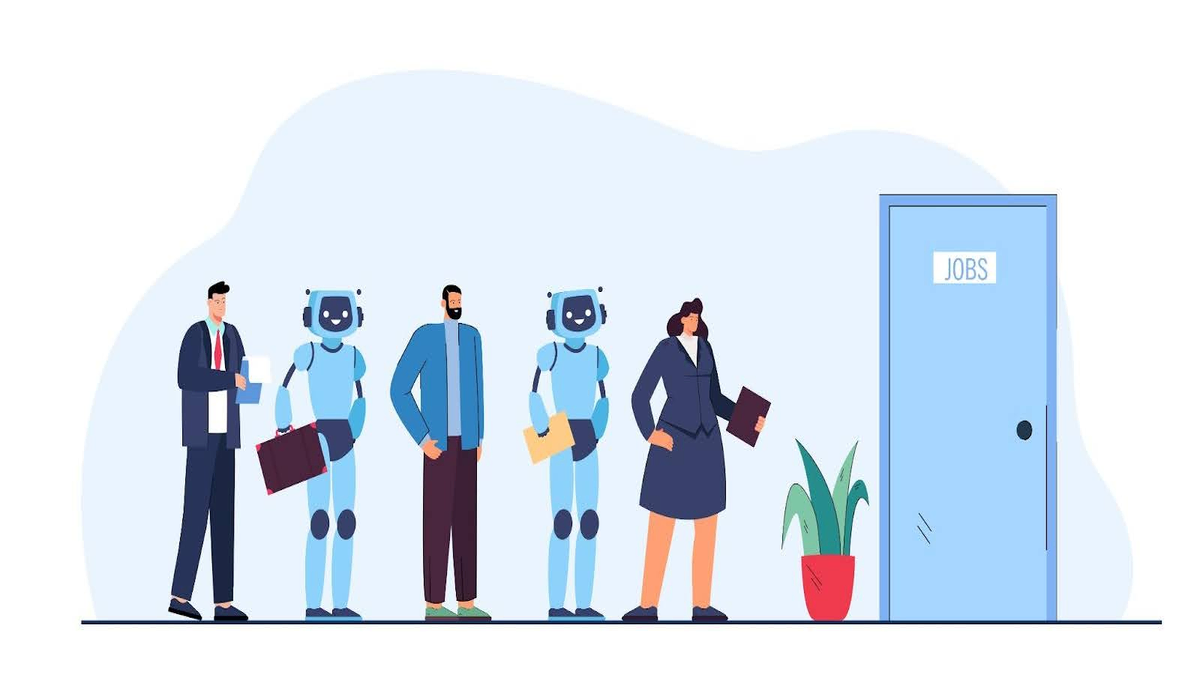
In today’s volatile, uncertain, complex and ambiguous (VUCA) environment, organizational talent needs are evolving rapidly. Organizations must not only identify the right talent but also properly assess candidates with high potential and determine how to recruit, manage and retain them effectively.
Recruitment is becoming increasingly data-driven, with AI adoption growing across industries. However, as multiple layers of technologies and tools enter the recruitment space, complexity increases when these systems are implemented without clear structure and oversight.
At BPTW Best Place To Work®, the use of AI in recruitment is evaluated within the broader context of structured human capital management. Under the HCM 3000 Standard, recruitment technologies are assessed not as standalone tools, but as components of a documented, auditable people system. This ensures that AI adoption supports fairness, validity, and governance rather than automating poorly designed hiring practices.
The Current AI in Recruitment Landscape
AI-powered recruitment technologies now cover the entire hiring process:
In sourcing and advertising, AI is used for job advert optimization through textual analysis, strategic job posting via marketing algorithms, and automated candidate search systems.
In screening and engagement, AI guides candidates with chatbots, parses CVs for keyword matching, automates reference checks, and screens social media profiles.
In assessment and evaluation, AI supports skills assessments, psychometric testing, automated interviews, and response analysis tools.
These techniques offer significant benefits including faster hiring cycles, broader candidate reach, and more consistent screening. However, they also introduce serious risks when implemented without proper safeguards.
These practices align with internationally recognized guidance, including ISO 30405 Annex A for structured recruitment processes.
The Bias Problem
The most critical concern with AI in recruitment is bias. If the training data contains bias, even unintentionally, the entire process can discriminate against candidates based on diversity dimensions or other unintended characteristics.
AI systems learn from historical data. When those patterns do not reflect real predictors of job performance, capable candidates can be excluded and hiring outcomes weakened. If trained on biased past decisions, algorithms replicate those preferences, amplifying disparities rather than reducing them.
This creates a troubling cycle where poorly designed AI systems amplify and systematize bias rather than reducing it.
In a VUCA environment, where roles evolve quickly and historical patterns lose relevance, this reliance on biased legacy data increases both ethical and performance risk.
Essential Implementation Guidelines
Training data transparency is foundational
Before implementing any AI in recruitment system, understand the data foundation.
- How many data sets were used, and what was their demographic distribution?
- How was bias-free data selection ensured?
- How was stereotyping identified and addressed?
- How does the system handle candidates from different backgrounds?
If vendors cannot provide clear answers, you’re trusting an unverifiable system with decisions that significantly impact people’s careers.
Algorithm performance must be demonstrably fair
Algorithms should be empirically proven not to discriminate. Request these specific metrics:
- Accuracy: Percentage of candidates correctly classified
- Precision: Ratio of correctly identified qualified candidates to all flagged as qualified
- Recall: Percentage of truly qualified candidates successfully identified
- F1 Score: Balanced measure combining precision and recall
These metrics require regular monitoring, especially for machine learning systems where algorithms evolve over time.
Assessment tools must meet validity and reliability standards
AI assessment tools must meet established standards:
- Objectivity: Consistent evaluation across time and reviewers
- Reliability: Reproducible results for similar candidates
- Criterion Validity: Proven correlation with actual job performance
- Construct Validity: Accurate measurement of intended qualities
- Fairness: Equitable treatment across all candidate groups
These are fundamental requirements, not optional extras.
Candidate transparency is a governance requirement
Inform candidates when AI influences their evaluation. Explain these key points:
- When and where AI is used in the process
- What data is collected and analyzed
- How analyses influence hiring decisions
- Whether recommendations are final or subject to human review
This builds trust, ensures legal compliance, and enables informed consent.
Organizations must understand how AI decisions are generated
Know what your AI system optimizes for, what inputs it considers, how it weighs factors, and what assumptions underpin its design. Without this understanding, you cannot evaluate whether the tool aligns with your values and obligations.
AI systems must account for non-standard career profiles
AI systems struggle with non-traditional profiles. This includes career changers, unconventional educational backgrounds, career gaps, or unique skill combinations. Ensure your system does the following:
- Includes edge cases in training data
- Flags unusual profiles for human review rather than automatic rejection
- Can learn from successful edge cases
Human oversight remains essential in hiring decisions
Establish clear policies requiring human involvement for:
- Final hiring decisions
- Rejections of apparently strong candidates
- Explaining decisions to candidates
- Assessing cultural fit and growth potential
AI should support decision-making, not replace it entirely.
Legal and regulatory compliance must be continuously monitored
Legal frameworks around AI in hiring vary by jurisdiction and evolve rapidly. Some regions require bias audits, candidate disclosure, or restrict certain technologies. Organizations operating internationally must comply with regulations in every hiring location.
The Broader Context: Structured People Management
AI recruitment tools work best within structured human capital management systems. If your hiring process is inconsistent and poorly documented without AI, adding algorithms simply automates those problems.
Under structured frameworks such as HCM 3000, recruitment is evaluated alongside workforce planning, development, performance, and retention to ensure consistency and accountability.
Effective AI in recruitment requires clear job requirements, documented processes, alignment with business strategy, integration with other talent systems, and accountability mechanisms. When recruitment is managed alongside planning, development, performance, retention, and transitions as an integrated system, AI becomes a tool for building better workplaces rather than just faster hiring.
Establishing controlled AI adoption
Audit current tools. Identify what AI you’re already using and what safeguards exist.
Define standards. Document your performance and fairness requirements before evaluating vendors.
Start small. Implement AI in one area, monitor closely, then expand based on results.
Train your team. Ensure everyone understands how tools work and their limitations.
Create feedback loops. Enable recruiters, managers, and candidates to flag concerns.
Review regularly. Assess performance and fairness quarterly, adjusting as needed.
Conclusion
Adopting AI in recruitment within a structured people management system ensures that technology supports better hiring decisions rather than replacing human judgment.
When implemented within structured people management systems, AI in recruitment becomes a governance tool rather than a shortcut. Clear requirements, documented processes, and ongoing evaluation allow organizations to benefit from automation without compromising fairness or accountability. In this context, AI supports better hiring decisions by strengthening human judgment, not replacing it.