Every manager has faced this: some team members are drowning in work while others don’t have enough to fill their day. Projects slip. Budgets blow out. Good people burn out and leave.
The problem isn’t your people. It’s workforce allocation. Getting the right work to the right people at the right time sounds simple but rarely is. Most organizations only react after problems appear. The smarter approach is preventing them.
Recognizing Workforce Allocation Problems
Several warning signs indicate allocation issues need attention:
Team members in the same department have drastically different workloads. One person is overloaded while another is underutilized, creating inefficiency and frustration.
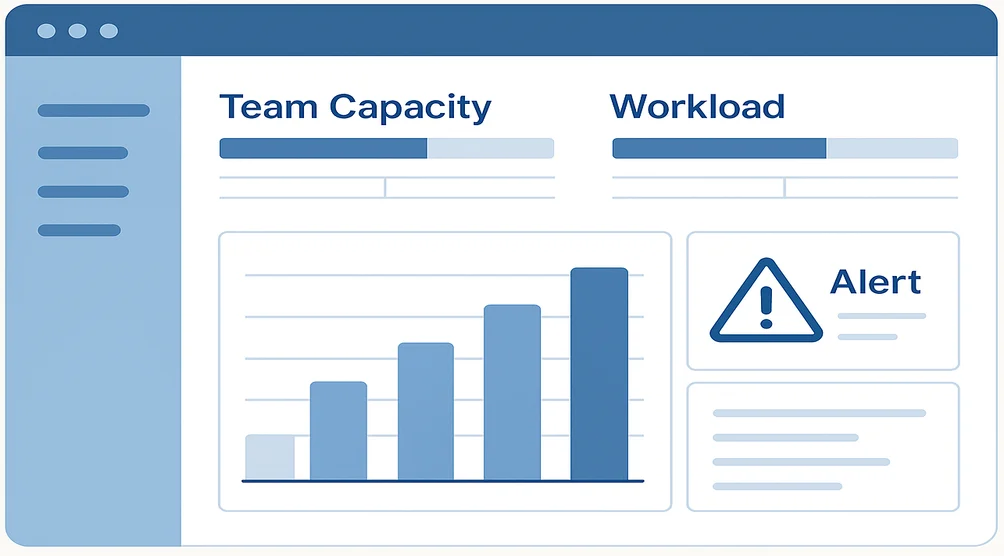
A team has insufficient capacity for assigned work. Deadlines slip, quality suffers, and burnout risk increases.
A team has excess capacity relative to available work. Utilization drops below targets and resources are wasted.
Different teams face opposite problems. One department drowns in work while another has excess capacity, despite needing similar skills.
Nine Workforce Allocation Actions
Match these actions to your specific situation. Start with simpler solutions before implementing major changes.
1. Redistribute Work Between Team Members
When some workers are overallocated while others are underutilized within the same team, move work from overloaded people to those with available capacity.
This requires clear visibility into who actually has bandwidth. Without it, a developer might work weekends while another team member operates at 50% capacity.
This works when underutilized people possess the skills needed for redistributed work.
2. Split Work Between Multiple People
Assign more than one person to work on the same activity when work items are too large for one person or to spread knowledge across the team.
A complex client implementation might overwhelm one project manager. Assigning senior and junior project managers together shares the load, reduces risk, and builds capability.
3. Increase Working Hours Within Limits
When a team faces temporary work surges, increase allocated working hours through overtime or flexible scheduling within legal and policy limits.
Accounting teams working extended hours during tax season is appropriate because it’s predictable and temporary. The key word is temporary—sustained overtime leads to burnout and declining productivity.
4. Reduce Working Hours
When a team has less work than capacity and utilization drops below targets, reduce allocated hours to match actual work available.
Customer support teams experiencing seasonal summer volume drops can adjust schedules rather than paying for unused capacity. This works when lower demand is temporary and you want to retain the team.
5. Share Work and Workers Between Teams
When some teams have surplus capacity while others with similar skill requirements face deficits, temporarily move work or workers between teams.
If marketing has excess design capacity while product desperately needs design support, temporarily assign a designer to help the product team. This requires coordination and managers willing to prioritize overall organizational success.
6. Reduce Total Work Demand
When a team faces persistent deficit even after trying actions 1-5, reduce the total work the team must complete by cutting low-priority activities or slowing delivery timelines.
If your development team is consistently overallocated, you might be building too many features simultaneously. Defer lower-priority features to match team capacity.
7. Increase Capacity by Adding Workers
When a team has persistent deficit that redistribution can’t resolve, and the work demand is both necessary and sustainable, recruit new employees or engage contractors.
If your sales team grows faster than implementation can handle, and the work is profitable and ongoing, hire additional implementation specialists.
This action has the longest timeline and highest cost, so ensure demand is lasting before committing.
8. Increase Demand for Surplus Capacity
When a team has persistent surplus capacity and you want to keep the team together, find or create additional work that productively uses available capacity.
If your IT infrastructure team automated many routine tasks creating excess capacity, use that capacity for infrastructure improvements you’ve postponed.
9. Reduce Capacity
When a team has persistent surplus capacity and lower demand is permanent, reduce total capacity through furloughs, layoffs, or ending contractor relationships.
If your organization shifted from on-premise to cloud-based software, the installation team faces permanently reduced demand. Reduce team size to match the new reality.
Choosing the Right Action
These actions follow a progression. Actions 1-5 redistribute existing work and capacity. They’re quick and low-cost. Start here.
Actions 6-9 change total demand or capacity. They take longer, cost more, and have bigger impact. Only use these when redistribution doesn’t work.
Context matters. A temporary surge needs a different response than permanent demand change. Skills that exist elsewhere enable different solutions than skills you don’t have anywhere.
Making Workforce Allocation Work
Effective workforce allocation requires visibility into who has capacity, who’s overloaded, and where work accumulates. Create simple tracking mechanisms. A spreadsheet showing allocated versus available hours works fine.
Review allocation regularly. Monthly reviews work for most situations, weekly for fast-moving environments. Empower managers to redistribute work, adjust schedules, or request help without elaborate approval processes.
Communicate transparently when increasing hours, moving people between teams, or reducing capacity. People accept difficult decisions more easily when they understand the reasoning.
The Bottom Line
Workforce allocation problems are normal as demand fluctuates and circumstances change. The difference between organizations that handle this well and those that struggle isn’t whether problems occur—it’s whether they identify and address issues before they escalate.
Start with visibility into allocation across your organization. Establish regular reviews. Give managers clear actions based on specific circumstances. The goal is identifying problems early and taking appropriate action before they damage performance.
Images created by : Chat GPT
Need systematic approaches to workforce allocation? Learn how BPTW Certification provides practical frameworks for managing capacity and workload effectively.