Understanding workforce planning has become critical for organizational success. Workforce planning identifies your current workforce capabilities, projects future needs, and calculates the gap between them. This discipline ensures organizations have the right people with the right skills when they’re needed.
Within structured human capital frameworks such as HCM 3000, this process is governed as a strategic management discipline rather than a reactive HR activity.
International guidance such as ISO 30409 (Human resource management — Workforce planning) reinforces the need to systematically link workforce capability planning with organizational strategy and risk management.
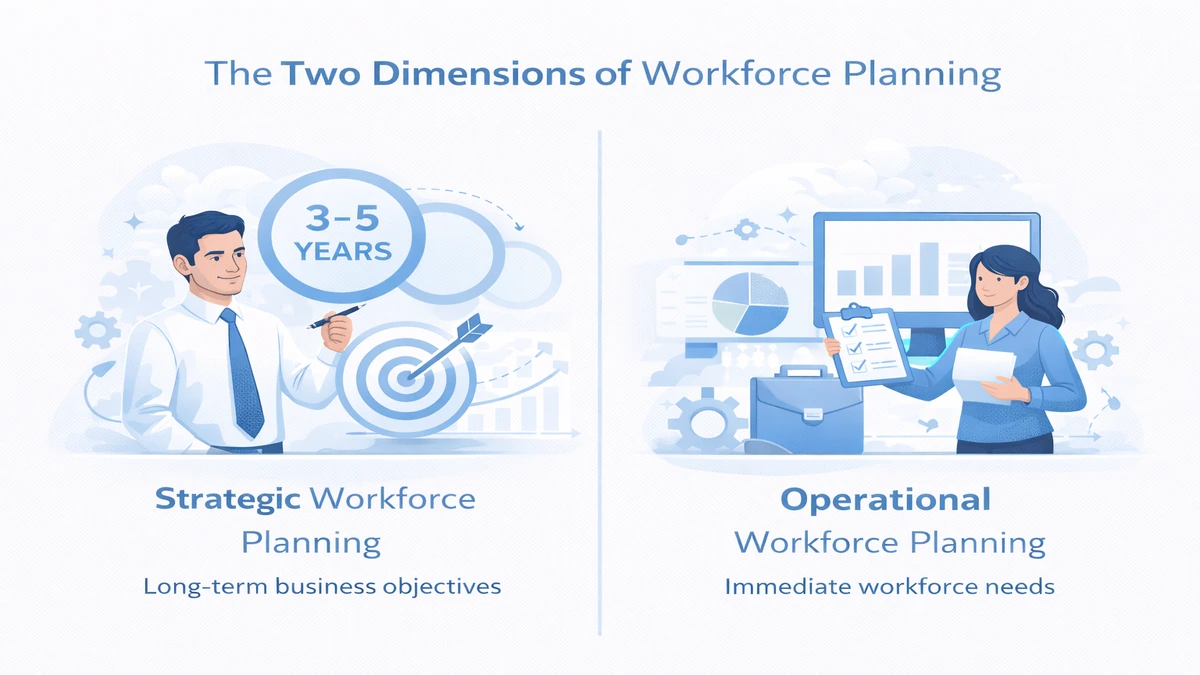
The Two Dimensions of Workforce Planning
Workforce planning operates at two distinct levels, each serving different organizational needs.
Strategic workforce planning looks three to five years ahead. It aligns talent requirements with long-term business objectives, anticipating how growth, technological advancement, and market evolution will reshape workforce needs. This includes succession planning for critical roles and leadership development programs.
Operational workforce planning addresses immediate requirements. It monitors workforce metrics such as turnover rates, productivity levels, and employee satisfaction. Adjustments happen based on operational demands, seasonal fluctuations, and current business conditions.
Both dimensions are necessary. Strategic planning without operational execution remains theoretical. Operational focus without strategic direction becomes reactive firefighting.
Why This Capability Can’t Be Ignored
The global business environment is increasingly complex and interconnected. Markets shift rapidly. Technology evolves continuously. Workforce demographics are transforming. Organizations need planning to navigate this complexity effectively.
The value of structured capability planning becomes clear when organizations face these dynamic challenges. Without structured workforce planning, businesses struggle to adapt quickly enough to remain competitive.
Planning connects human resource strategy to business strategy and financial plans. When your organization pursues new markets, adopts new technologies, or shifts strategic direction, workforce planning identifies the talent implications early. This visibility enables proactive responses through hiring, training, internal mobility, or restructuring.
The Business Case for Planning
Organizations without a structured planning framework encounter consistent problems. Critical positions remain vacant because succession plans don’t exist. Skill gaps surface unexpectedly when new initiatives launch. Training investments lack strategic direction. Hiring happens reactively under pressure, which increases costs and reduces quality.
These issues impact financial performance and operational effectiveness. Vacancies reduce productivity. Poor talent utilization wastes compensation investment. High turnover from inadequate development opportunities creates constant replacement costs.
Planning Through Organizational Change
This planning discipline becomes particularly valuable during significant organizational transitions. Growth requires different capabilities than maintenance. Restructuring demands a clear understanding of required versus available skills. Mergers and acquisitions involve integrating workforce with different profiles. Di-vestments require determining which capabilities to retain.
Planning helps organizations understand the workforce implications of business decisions before commitments are made, not after problems emerge.
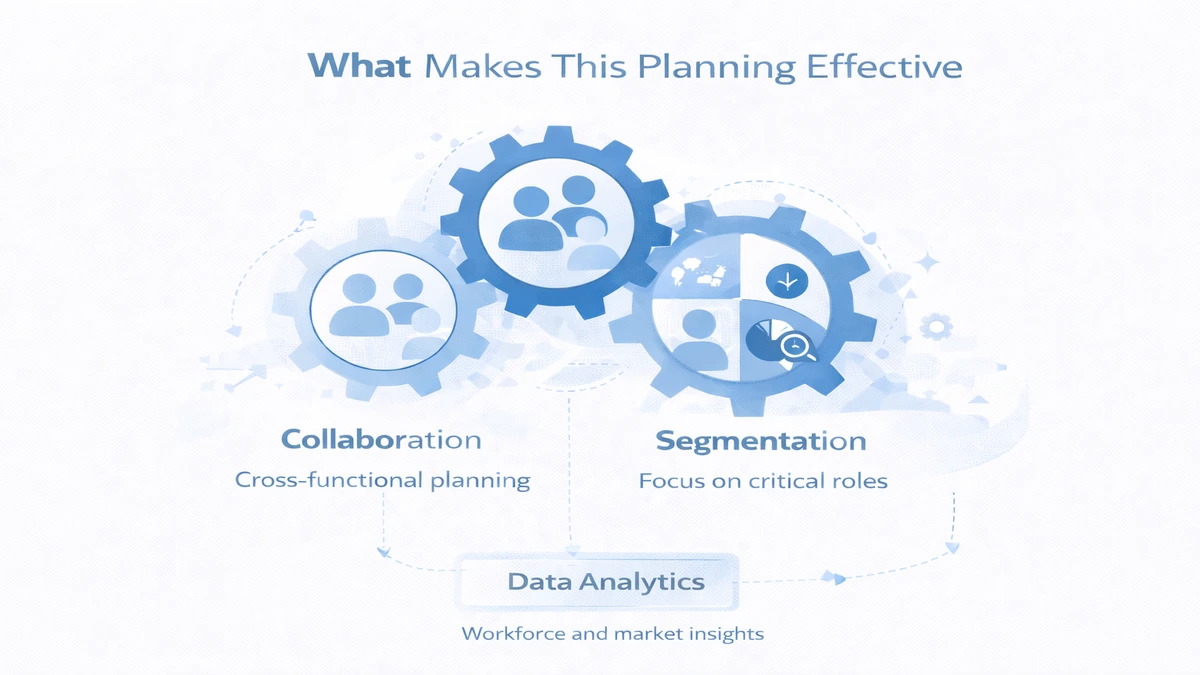
What Makes This Planning Effective
Effective planning requires collaboration across functions. HR brings workforce data and people expertise. Business leaders provide strategic direction. Finance contributes budget parameters. Department heads understand operational requirements.
This collaboration ensures plans reflect actual business needs rather than isolated functional perspectives.
Planning also depends on quality data. Workforce analytics reveal patterns in turnover, performance, and skill distribution. Skill inventories identify current capabilities. Market intelligence shows external talent availability. These inputs produce realistic projections about future needs and how to address them.
Segmentation improves planning effectiveness. Strategic roles that directly drive business success warrant more intensive planning focus than support functions. Understanding which roles are critical, which skills transfer across positions, and where talent bottlenecks exist enables smarter resource allocation.
Within HCM 3000, workforce planning requires organizations to identify critical roles, future capability needs, and workforce risks as part of structured human capital governance.
This aligns directly with ISO 30409, which emphasizes scenario-based workforce planning, role criticality assessment, and capability gap analysis rather than simple headcount forecasting.
Building Organizational Capability
This capability transforms how organizations approach their most significant asset. Instead of reacting to immediate staffing pressures, planning enables deliberate capability building aligned with business direction.
Organizations with mature planning adapt more effectively to changing conditions. They’ve considered potential scenarios, understood workforce implications, and prepared response options. When market conditions shift or strategic priorities change, execution happens more smoothly because the workforce side supports rather than constrains performance.
This capability becomes increasingly valuable as business environments grow more dynamic and competitive pressures intensify.
Workforce Planning: The Foundation for Resilience
This approach creates organizational resilience by making workforce requirements explicit and actionable. It reduces vulnerability to key person dependencies, skill shortages, and demographic shifts.
Planning also improves decision quality. When workforce implications are visible during strategy development, leaders make more informed choices about timing, resource allocation, and risk management.
The result is an organization better positioned to execute its strategy with confidence that workforce capability will support business objectives.
BPTW Best Place To Work® certification evaluates how consistently organizations apply workforce planning as part of structured human capital governance, not as an isolated HR exercise.
Assessment focuses on whether workforce planning outputs inform leadership decisions, capability investment, succession planning, and long-term organizational sustainability rather than remaining theoretical documents.
Image source: Illustrative visual for workforce planning concepts